
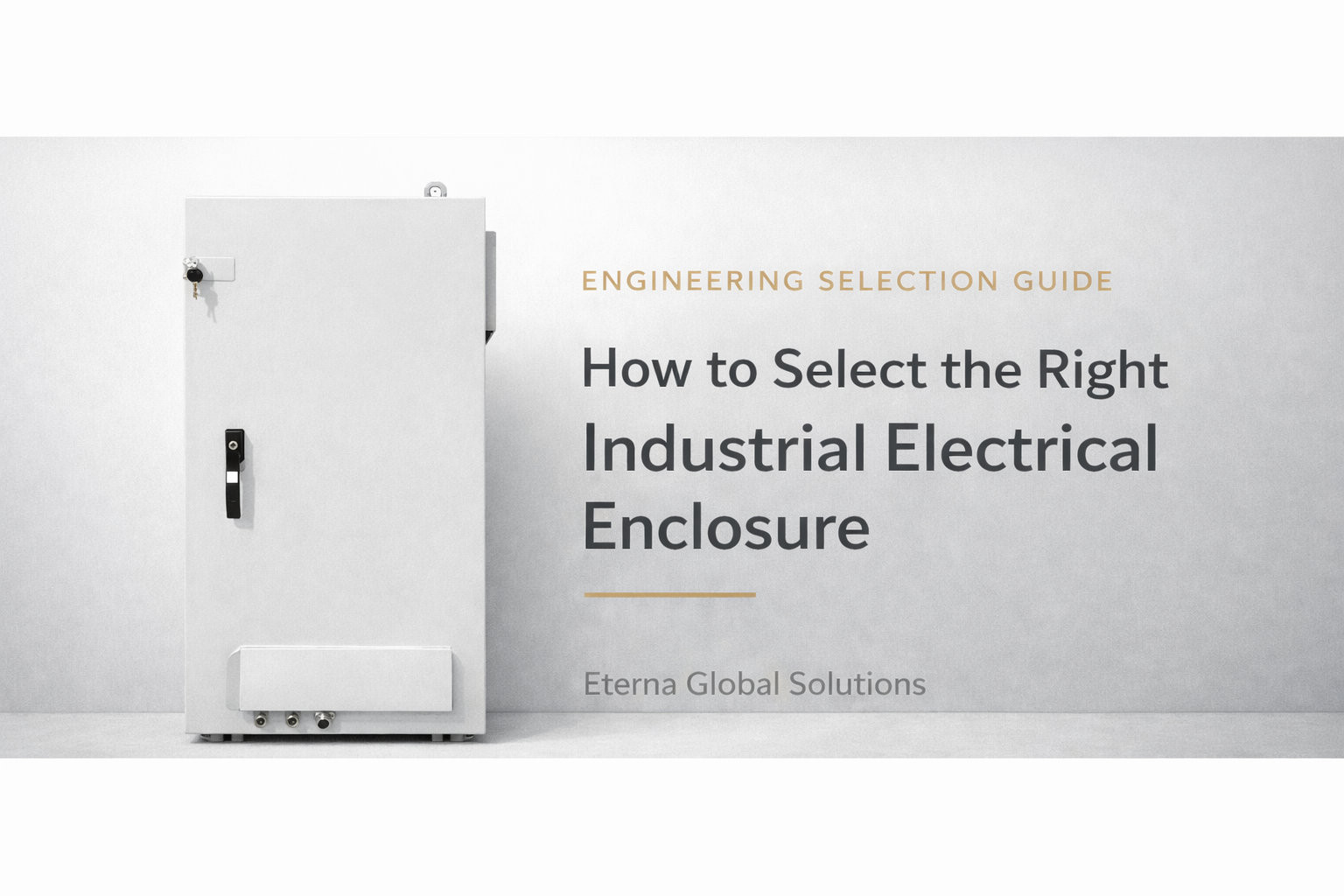
Engineer’s Practical Guide • Eterna Global Solutions
Why enclosure selection matters
Incorrect enclosure specification is a frequent root cause of field failures — overheating, corrosion, water ingress, gasket failure, and certification issues. If the enclosure is selected late in the design, you’re often forced into compromises that increase cost and risk.
Practical approach: Select the enclosure first (environment + thermal), then place electronics inside it.
Indoor vs Outdoor: selection rules
“Outdoor” is not just rain. Sunlight, humidity cycles, dust load, and corrosion are usually the real killers. If your equipment can ever see direct sunlight, humidity, or washdown exposure, treat it as an outdoor application.
Indoor applications
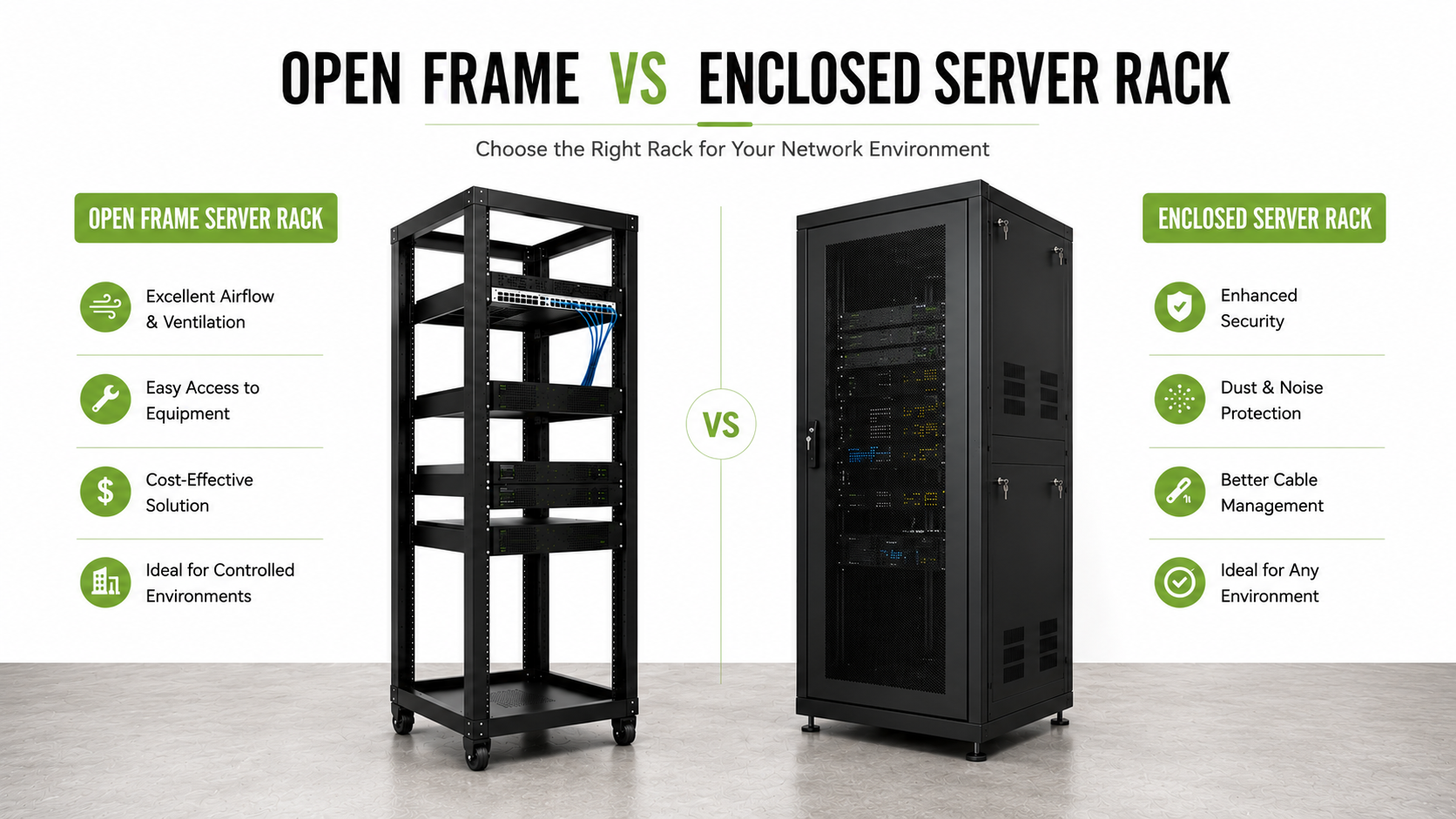
- Dust control + filtered ventilation
- Service access + cable routing
- Thermal management (fans often enough)
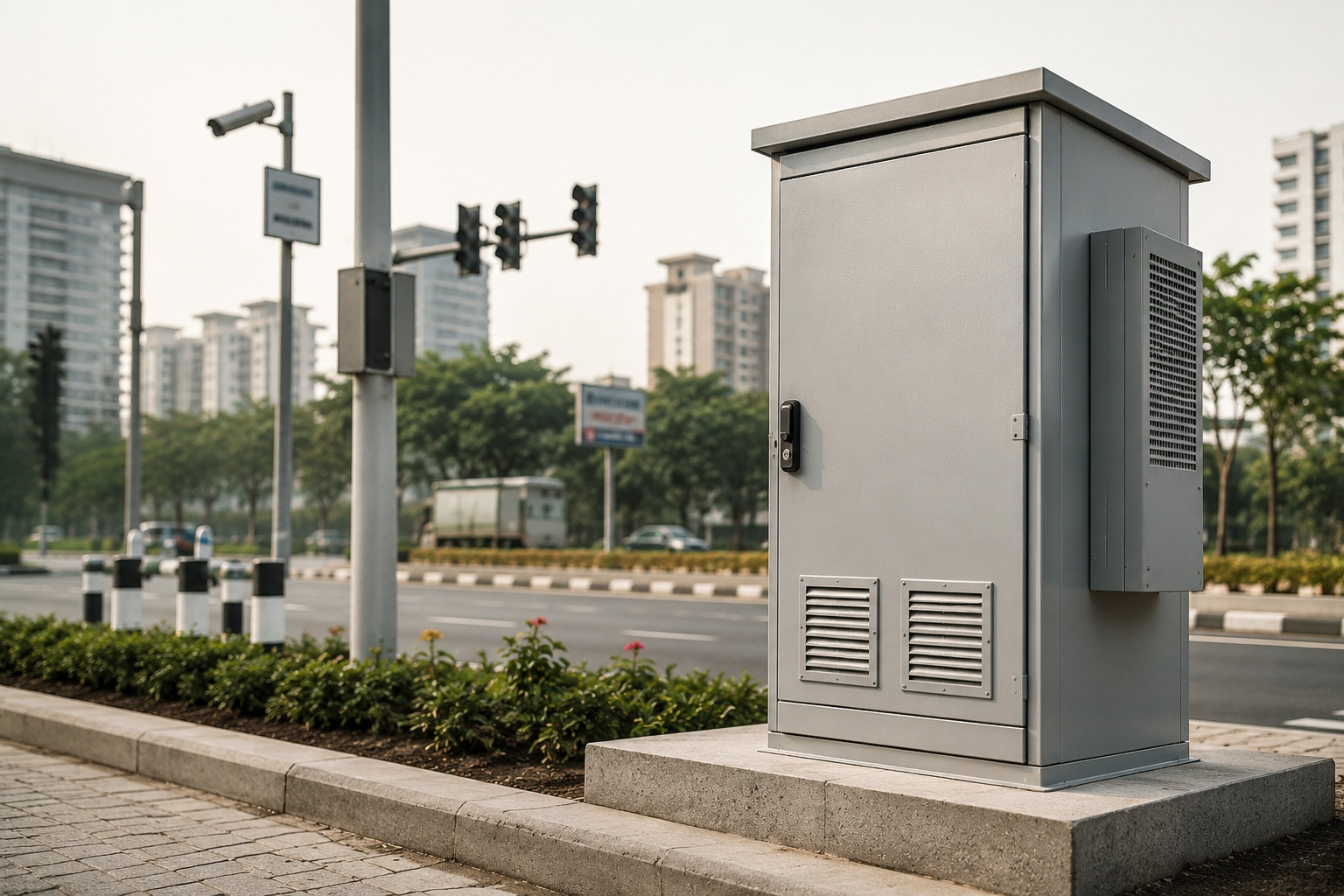
Outdoor applications
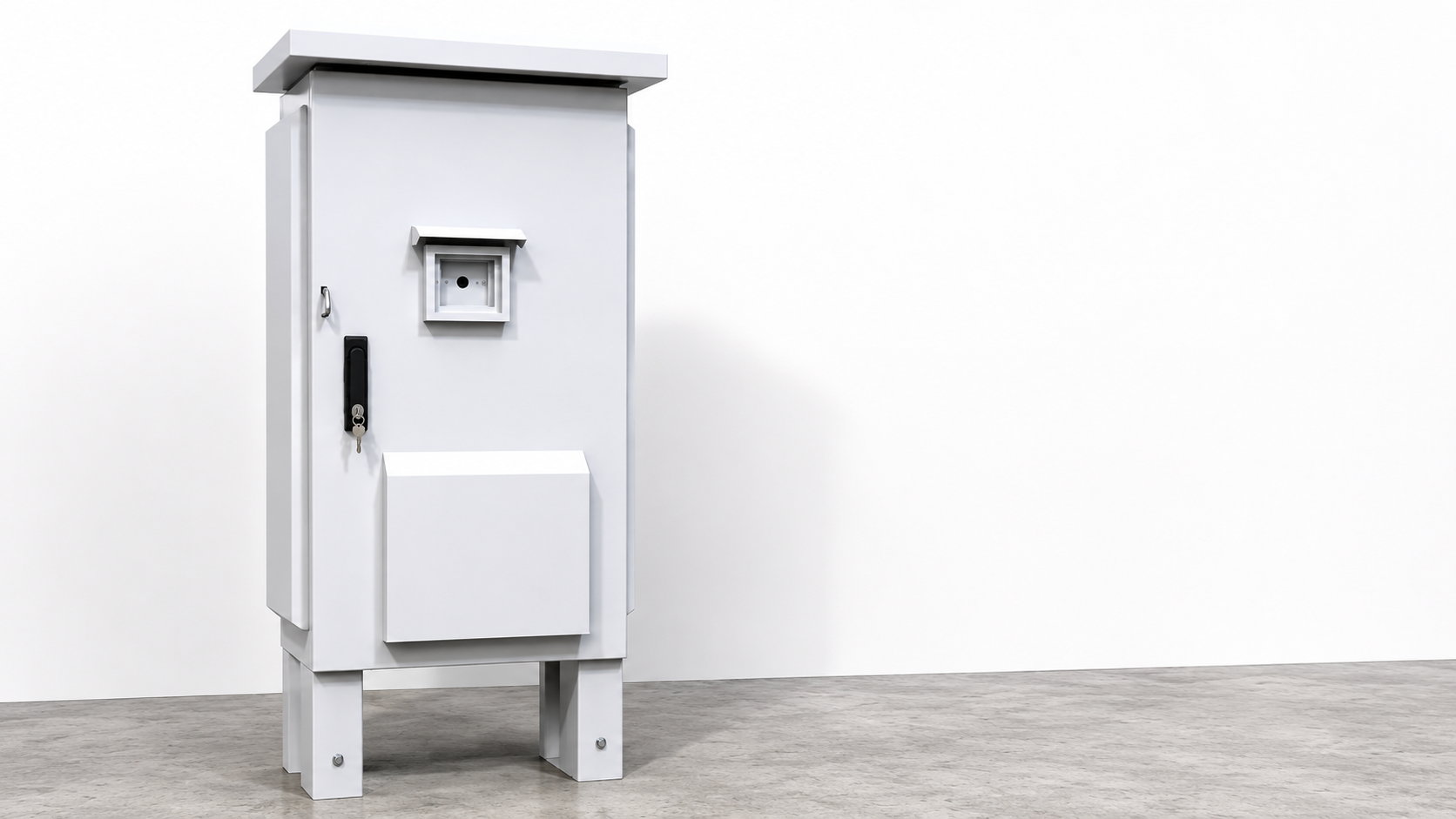
- UV + rain + humidity cycles
- Corrosion resistance matters
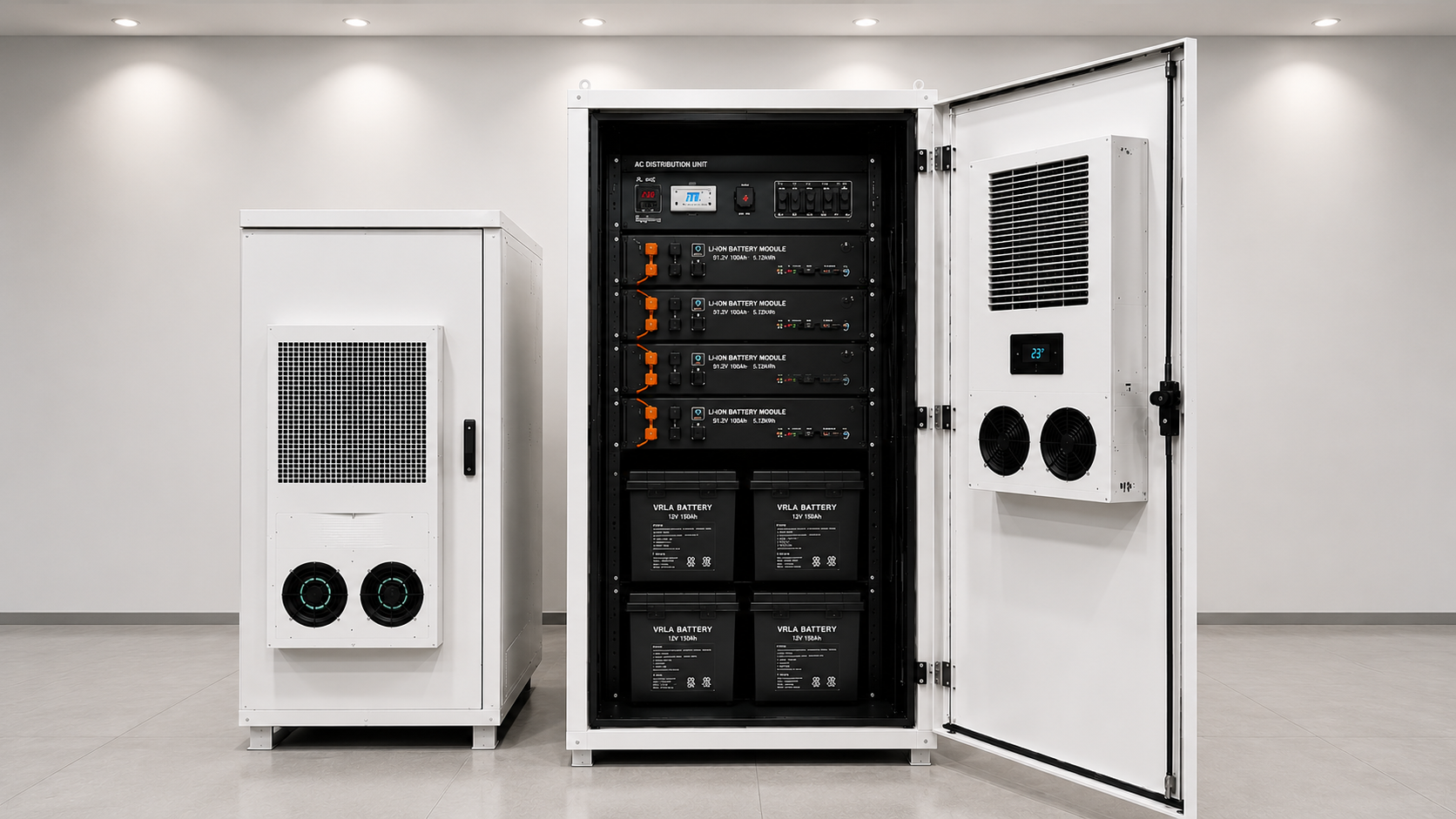
- Sun load may require AC / heat exchanger
Decision rule: If direct sunlight or rain is possible at any time → design as outdoor.
IP Rating vs NEMA Rating: what’s the difference?
IP ratings focus on ingress protection (dust/water). NEMA ratings (common in the US) include broader environmental considerations and test conditions. Many teams get stuck converting them — the key is to match the real exposure.
| IP Rating | Typical protection | Common use |
|---|---|---|
| IP54 | Dust-protected + splashing water | Indoor industrial |
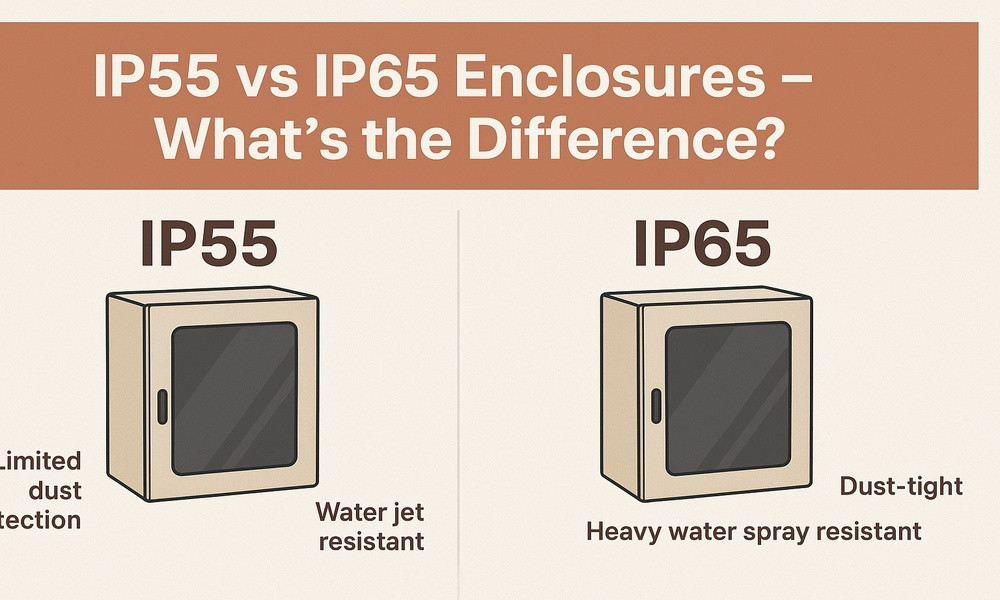
| IP55 | Dust-protected + water jets (limited) | Workshops / covered outdoor |
| IP65 | Dust-tight + water jets | Outdoor (general) |
| IP66 | Dust-tight + powerful water jets | Heavy rain / washdown |
Quick equivalence (practical): NEMA 4 ≈ IP66. NEMA 4X ≈ IP66 + corrosion protection.
Material selection (CRCA vs Galvanized vs SS304 vs Aluminum)
Material choice drives corrosion performance, durability, weight, and total cost of ownership. Below is a practical selection logic used by many OEMs.
CRCA Steel (Powder Coated)
Cost-effective for indoor environments. Ensure correct pre-treatment + coating thickness.
Galvanized Steel (GI)
Best general-purpose option for outdoor industrial use. Strong balance of cost + corrosion resistance.
Stainless Steel 304
Preferred for food/pharma, coastal, high-corrosion zones, and washdown-prone environments.
Aluminum
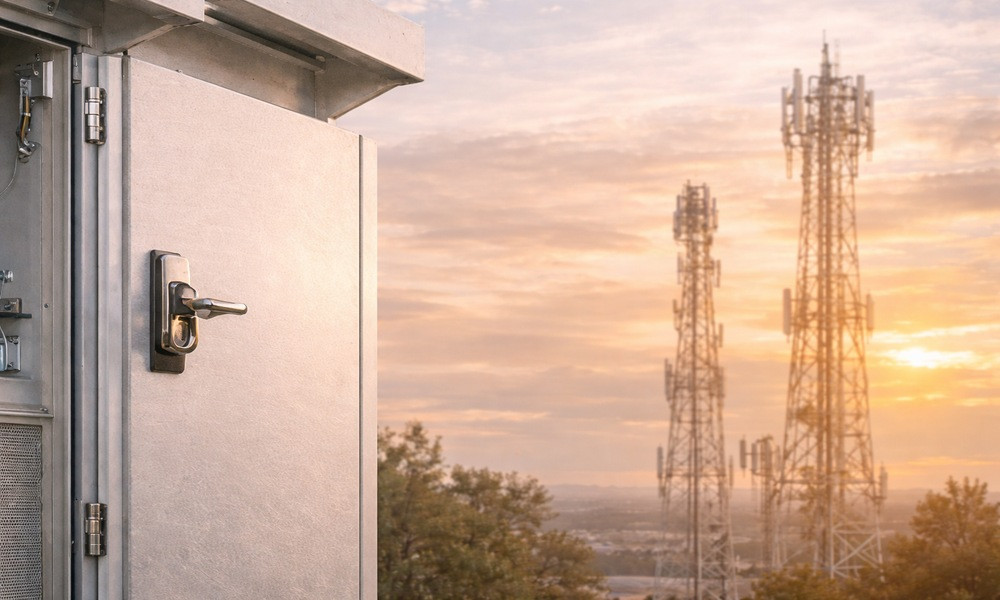
Lightweight and corrosion-resistant; common in telecom/solar where weight and handling matter.
Most common “sweet spot”: For outdoor industrial applications, galvanized steel often delivers the best balance of durability and cost.
Enclosure sizing: the engineer’s method
A reliable sizing rule is to keep electronics at ≤ 60% of the internal usable volume to allow air circulation, service clearances, and thermal headroom.
Rule: If you can’t route cables or place airflow paths without crowding, the enclosure is undersized — even if “it fits.”
Thermal decision (quick logic)
- ΔT ≤ 10°C: filtered fan ventilation is usually sufficient
- ΔT 10–20°C: intake + exhaust fan strategy + better airflow path
- ΔT 20–30°C: consider heat exchanger (sealed) or higher airflow
- ΔT > 30°C: enclosure AC / active cooling is recommended
Interactive enclosure selection tool (no cost — only spec guidance)
Choose your environment and constraints. This tool outputs a practical recommendation you can use as a starting point for a proper datasheet/spec.
Suggested protection: —
Suggested material: —
Cooling direction: —
Cooling & ventilation: avoid the most common failure
Most enclosure failures are thermal failures, not electrical failures. Good design means controlled airflow paths, correct filter selection, and sealing strategy that matches your IP/NEMA requirements.
Key principle: If you need a sealed enclosure (high IP), a heat exchanger or AC is often safer than “adding more fans”.
Pre-order checklist (use this before sending RFQ)
Environment
- Indoor / Outdoor / Washdown / Coastal
- Ambient temperature range
- Dust load and cleaning method
Electrical & thermal
- Heat load estimate (W)
- Ventilation allowed or sealed required
- Fan/Filter/AC requirement
Mechanical
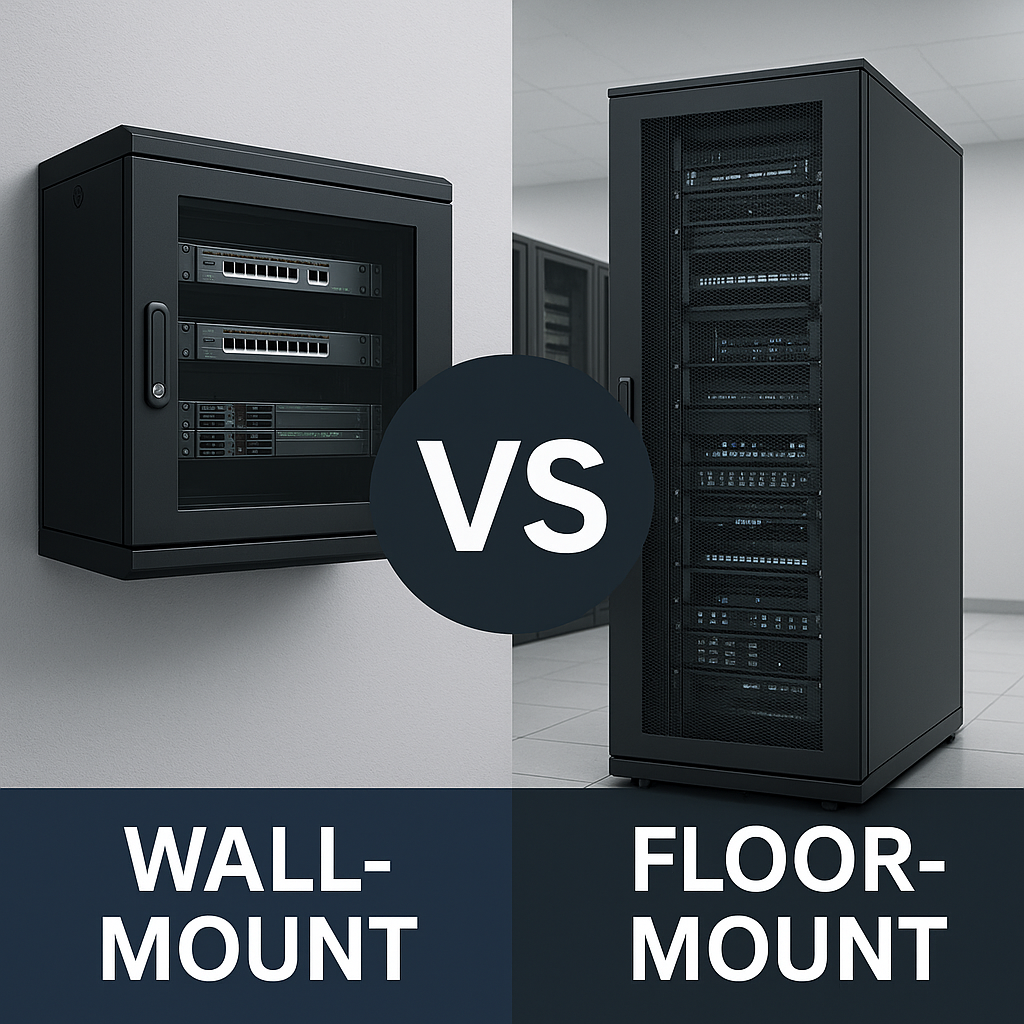
- Mounting type: wall / floor / pole
- Cable entry side + gland plate
- Service access and door swing
Compliance
- Target rating: IP / NEMA
- Material requirement (GI / SS / Al)
- Finish requirement (powder coat / SS brush)
Request a custom enclosure recommendation
Share the basics below — we’ll recommend a starting spec (IP/NEMA, material, ventilation direction, and form factor).
FAQ
What is the most common enclosure mistake? +
Choosing the enclosure after finalizing electronics. This often leads to poor airflow, undersized volume, and wrong ingress/corrosion protection — increasing failures and redesign cost.
Is IP65 always enough for outdoor? +
For general outdoor rain exposure, IP65 is commonly used. For heavy rain, washdown, or directed water jets, IP66 (or higher) is safer. Always match to your real exposure conditions.
When should I use stainless steel 304? +
Use SS304 for coastal/high-corrosion zones, food/pharma environments, and frequent washdown. It improves corrosion resistance and long-term appearance compared to coated mild steel.
Fans vs AC — how do I decide quickly? +
If your enclosure must remain sealed (high IP) and heat is moderate-to-high, AC/heat exchanger is usually better. Fans are effective when you can allow ventilation and control dust with proper filters.



-20082508144130.jpg)
-20082508385589.jpg)



-29112509574730.jpg)

-18122502213226.png)