
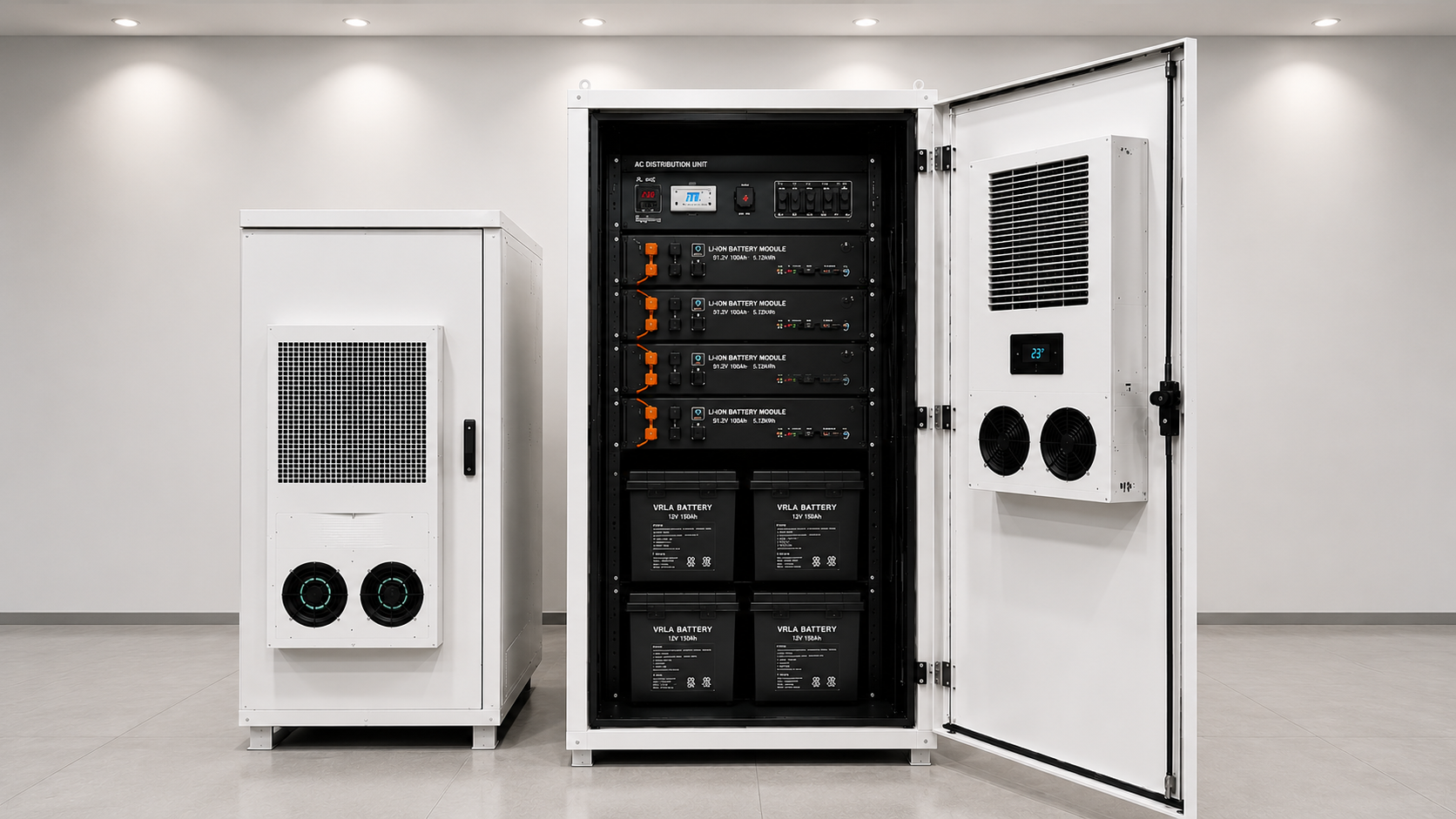
Battery Rack & Thermal Management • Eterna Global Solutions
Why IP-rated battery racks with integrated AC are a different engineering problem
A battery rack with a rack-mounted AC unit is not simply a battery rack plus an air conditioner. It is a sealed thermal system where the IP rating, the AC capacity, the battery chemistry, the internal layout, and the safety provisions are all interdependent. Get one wrong and you don’t just have a hot rack — you have a safety incident.
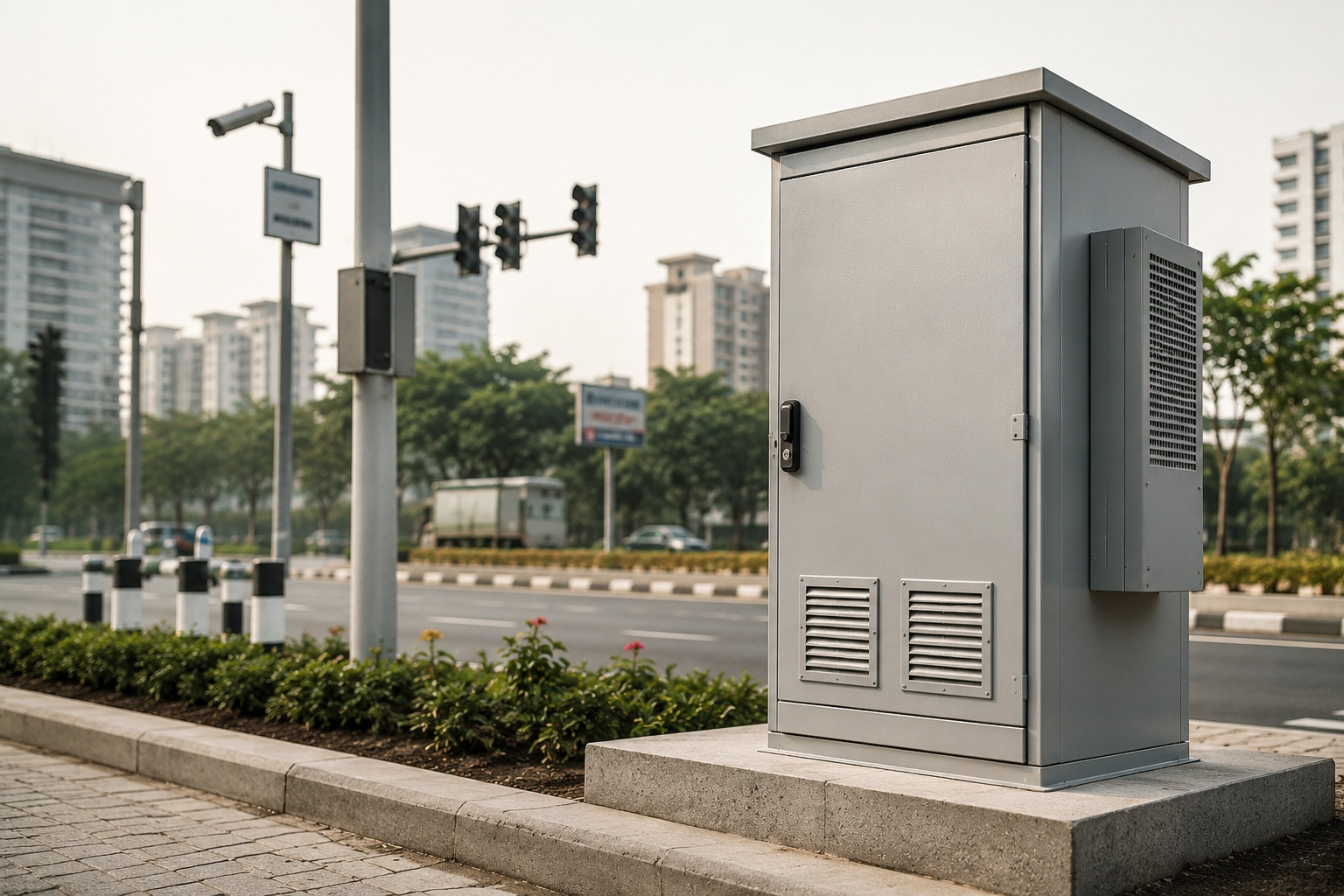
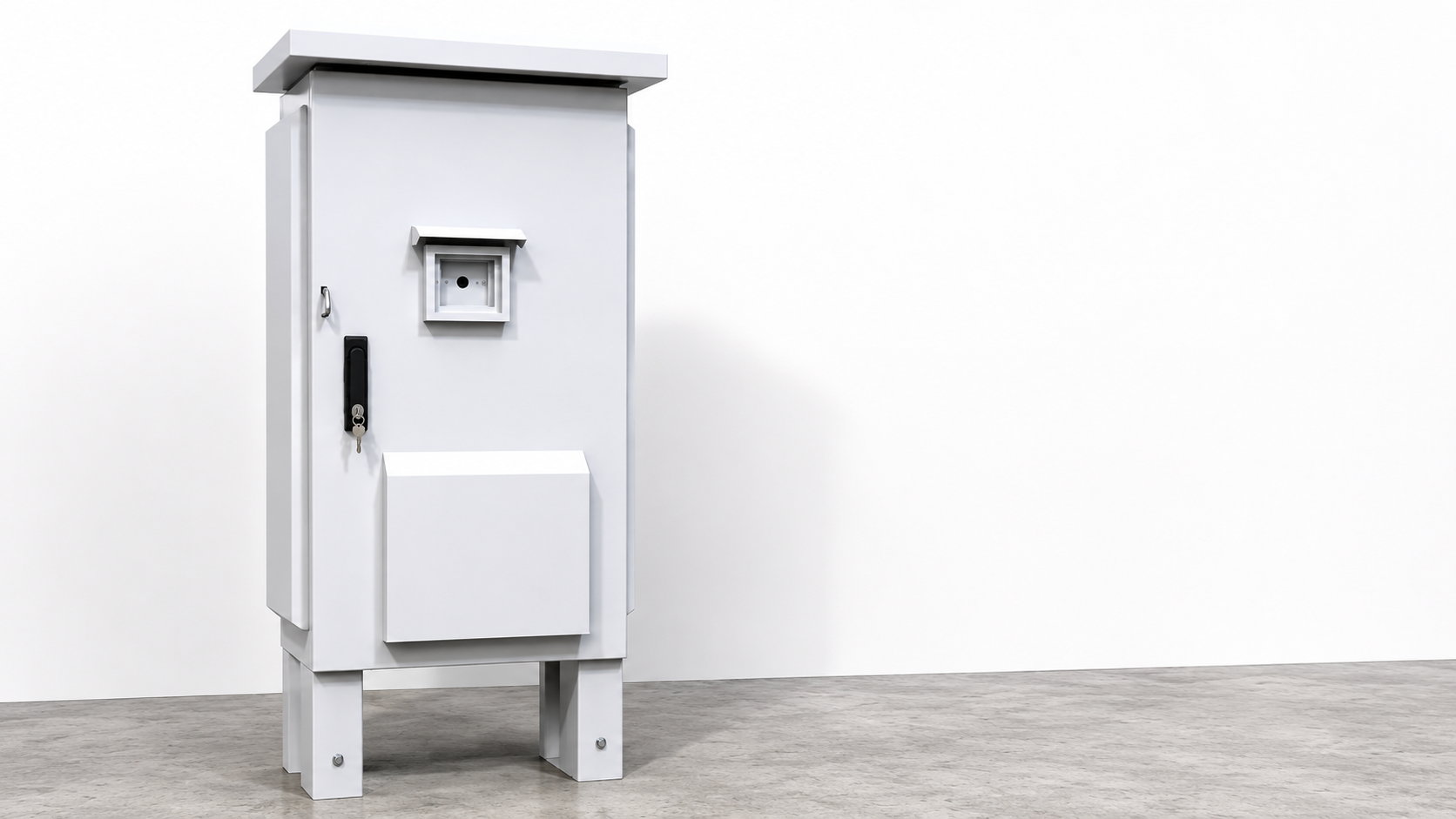
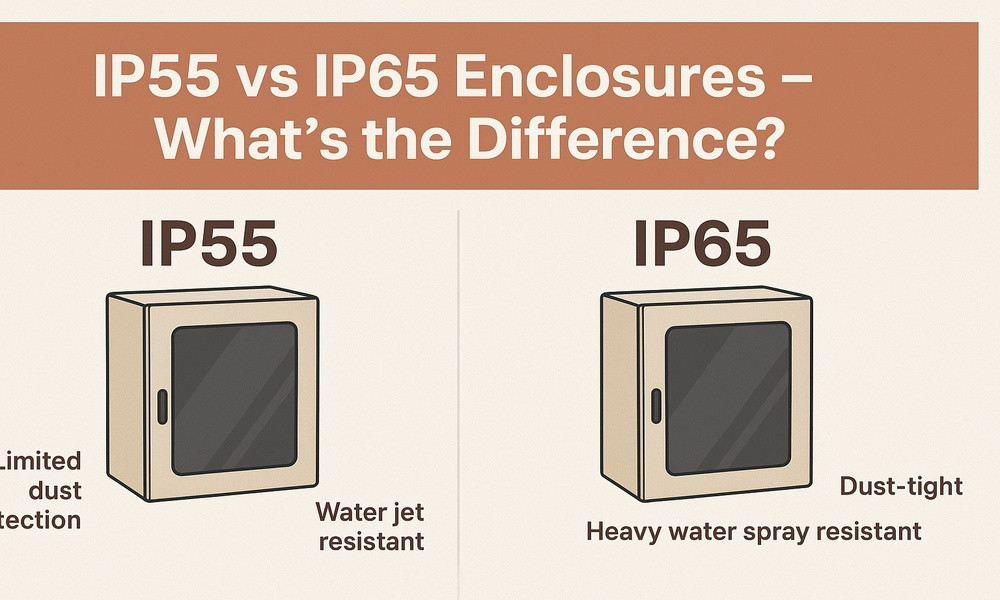
The challenge is this: to maintain an IP55 or IP65 rating, the enclosure must be sealed against dust and water. But batteries generate heat, and heat must be removed. The only way to do both simultaneously is a closed-loop cooling system — a rack-mounted AC unit that circulates internal air through a refrigeration cycle without any air exchange with the outside. This is fundamentally different from a fan-ventilated cabinet, and it demands a completely different specification approach.
25–35°C
Optimal operating temperature for both Li-ion and VRLA batteries
50%
Reduction in VRLA battery life for every 8–10°C above 25°C ambient
IP65
Minimum recommended rating for any outdoor battery rack with integrated AC
Safety warning: Li-ion thermal runaway generates toxic and flammable gases. An IP-rated enclosure without proper venting, fire detection, and gas release provisions can turn a cell failure into a catastrophic enclosed fire. This is not a specification shortcut — it is a life-safety requirement.
Li-ion vs VRLA — how your battery chemistry changes everything
Select your battery chemistry to see how it changes the rack structure, AC sizing, safety provisions, and IP sealing specification.
Lithium-ion (Li-ion)
LFP / NMC / NCA chemistries
Higher energy density, lighter, no acid, but requires strict thermal management, BMS integration, and fire safety provisions. The future of telecom and BESS.
Optimal temp range
20–35°C
Heat generation
Moderate (charge/discharge)
Thermal runaway risk
High — requires mitigation
Gas generation
Yes (failure mode) — vent required
Acid risk
None
Weight per kWh
6–10 kg/kWh (LFP)
VRLA / Lead-acid
AGM / Gel sealed batteries
Proven technology, lower cost, widely available. Heavier, temperature-sensitive, generates hydrogen gas during overcharge. Still dominant in telecom and UPS.
Optimal temp range
20–25°C (strict)
Heat generation
Low (float) to high (equalise)
Thermal runaway risk
Low but degrades fast above 30°C
Gas generation
H2 on overcharge — vent mandatory
Acid risk
Yes — acid-resistant coating required
Weight per kWh
25–35 kg/kWh (heavy)
—
Rack-mounted AC sizing calculator
Enter your battery system parameters. Get the minimum AC capacity required to maintain safe battery operating temperature in a sealed IP-rated enclosure.
How this works: Battery heat load = charge/discharge losses + ambient heat ingress through enclosure walls. The AC unit must remove both loads simultaneously while maintaining a sealed IP-rated environment. This calculator uses industry-standard derating factors for Indian ambient conditions.
Full rack specification: Li-ion vs VRLA with rack-mounted AC
Every structural, safety, and thermal specification differs between the two chemistries. This table is the starting point for any RFQ or tender BOM.
| Specification | Li-ion Battery Rack + AC | VRLA Battery Rack + AC |
|---|---|---|
| Frame material | CRCA 2mm minimum, powder coat or SS304 | CRCA 3mm minimum, acid-resistant epoxy coat |
| Internal coating | Standard powder coat (no acid risk) | Acid-resistant epoxy on ALL internal surfaces (mandatory) |
| IP rating | IP65 minimum outdoor; IP55 acceptable for indoor/sheltered | IP55 minimum; IP65 for outdoor with full AC cooling |
| AC unit type | Closed-loop rack-mount AC, 300W–4000W depending on capacity | Closed-loop rack-mount AC, 300W–2000W (lower heat load at float) |
| AC mounting | Side-mount or top-mount on enclosure wall — NOT inside battery compartment | Side-mount on enclosure wall — NOT inside battery compartment |
| Temperature target | 20–35°C internal (LFP); 20–30°C (NMC) | 20–25°C internal (critical for rated life) |
| Ventilation / gas vent | Pressure-relief valve or explosion vent panel (thermal runaway gas release) | Hydrogen vent pipe: 8–16mm dia minimum, routed to outside enclosure |
| Fire detection | Mandatory: smoke + temperature sensor wired to BMS alarm output | Recommended: temperature sensor for early overcharge detection |
| BMS provision | Mandatory: BMS communication port (RS485 / CAN), display panel mounting | Not required (charger-managed) but temperature alarm output recommended |
| Shelf load rating | 100–200 kg per shelf (Li-ion is lighter) | 250–400 kg per shelf (VRLA is very heavy) |
| Earthing | Dedicated earth bar, 16mm² cable, bonded frame | Dedicated earth bar, 16mm² cable, bonded frame (also protects against electrolyte leakage) |
| Spill containment | Not required (no liquid risk in normal operation) | Mandatory: drip tray under each battery tier, drain provision |
| Cable routing | Power and BMS cables separated, fire-rated cable loom inside enclosure | Power cables only; use flexible cables for thermal expansion tolerance |
| Door gasket | EPDM dual-layer compression gasket (IP65 requires precision gasket groove) | EPDM dual-layer gasket + acid-resistant coating on gasket contact surfaces |
| Condensate drain | Mandatory: AC unit condensate drain with IP-rated drain fitting | Mandatory: AC condensate drain + separate spill drain from battery tray |
| Certification | UL9540A (thermal runaway propagation test) recommended for large BESS | IEC 61427 (battery standard); IEC 62485-2 (safety requirements for stationary batteries) |
Key rule: The rack-mounted AC unit must be a closed-loop system — no outside air enters the enclosure. If the AC unit uses outside air for internal cooling (like a split AC), it immediately defeats the IP rating. Always verify the AC unit’s own IP rating and sealing method before specifying.
IP rating & rack-mounted AC — the 5 rules that most suppliers get wrong
This is the section that separates a properly engineered IP-rated battery enclosure from one that looks right on paper but fails in the field within 12 months.
The AC unit itself must be IP-rated
Many rack-mounted AC units are designed for indoor server rooms with no IP rating. Installing an IP20 AC unit on an IP65 enclosure means the enclosure is IP20 at the AC mounting point. The AC unit body, its cable entry glands, and its condensate drain fitting must all individually meet the enclosure IP rating.
Closed-loop cooling only
The AC must circulate internal enclosure air through a refrigeration cycle and reject heat to the outside without any air exchange. Any mixing of internal and external air immediately breaks the IP rating. Specify “closed-loop rack-mount AC with external heat exchanger” — not a ventilated fan unit.
Condensate drain is a penetration
Every AC unit produces condensate water. That water must exit the enclosure. The drain fitting is a penetration in the enclosure wall — and it must be sealed to the IP rating. An unsealed or poorly sealed condensate drain is the most common cause of IP failure in battery enclosures with AC cooling. Specify an IP-rated condensate drain fitting as a line item.
Gas venting must not break IP
Both Li-ion (thermal runaway) and VRLA (hydrogen overcharge) require gas venting. But a simple vent hole breaks the IP rating. The solution is a pressure-relief valve (for Li-ion) or a one-way vent valve with hydrophobic filter (for VRLA hydrogen) — both designed to maintain IP rating in normal conditions while allowing gas escape under fault conditions.
Test the complete assembly, not components
An IP test on the enclosure body alone is meaningless. The IP rating must be tested on the complete assembly — with AC unit mounted, cable glands installed, condensate drain fitted, and gas vent valves in place. Insist on an IP test certificate for the complete assembled unit, not separate certificates for each component.
AC failure must not trap heat
If the AC unit fails in a sealed IP enclosure in Indian summer conditions, internal temperature can rise above 55°C within 30–60 minutes. This is a battery-damaging and potentially dangerous condition. Specify: high-temperature alarm at 40°C, automatic shutdown at 50°C, and a thermostat-controlled backup vent fan with IP-rated filter as a secondary fail-safe (this temporarily reduces IP to IP55 but prevents battery damage).
Pre-RFQ specification checklist
Complete this before sending any quote request. Every item affects either the price, the safety, or the field reliability of the finished unit.
Battery & thermal
Enclosure & IP
Safety & compliance
Installation & delivery
Frequently asked questions
What is the difference between a rack-mounted AC and a heat exchanger for battery enclosures? —
A rack-mounted AC (air conditioner) uses a refrigeration cycle to actively cool internal air below ambient temperature — essential when the enclosure is in high-ambient environments (35°C+) or when the battery has a strict temperature ceiling. A heat exchanger transfers heat from internal air to external air without refrigeration — it can only cool to slightly above ambient temperature, making it unsuitable for Indian summer conditions where ambient may reach 45–55°C. For most Indian outdoor battery enclosures, a rack-mounted AC is the correct solution, not a heat exchanger.
How do I size the AC unit for my battery rack? +
AC sizing has two components: (1) battery heat load = capacity (kWh) x C-rate x (1 - efficiency), typically 50–200W per 10kWh for VRLA at float, and 200–500W per 10kWh for Li-ion at 0.5C discharge; (2) ambient heat ingress through enclosure walls = depends on enclosure surface area, insulation, and delta-T between internal target and external ambient. Add both loads and apply a 20–25% safety margin. For Indian 45°C ambient with a 25°C internal target, the ambient component often exceeds the battery component — making AC sizing critical. Use our calculator above for a starting point and validate with your AC supplier.
Can I use a split AC instead of a rack-mounted AC on a battery enclosure? +
No — not if you need to maintain an IP rating. A split AC requires an air return path between the indoor unit and the enclosure interior, which creates an opening that immediately defeats any IP rating above IP20. Split ACs are only suitable for large walk-in battery rooms (like a BESS container), not for sealed outdoor enclosures. For IP55+ battery enclosures, you need a closed-loop rack-mount AC unit that is specifically designed to mount through the enclosure wall with a sealed, IP-rated body.
Why does battery temperature matter so much for VRLA batteries? +
VRLA battery life is extremely temperature-sensitive. The rated capacity and cycle life are specified at 25°C. For every 8–10°C rise above 25°C, battery life is halved. A VRLA battery rated for 5 years at 25°C will last approximately 2.5 years at 33°C, and only around 1.2 years at 43°C — which is typical Indian summer ambient inside an unventilated outdoor cabinet. This is why a rack-mounted AC is not a luxury for VRLA systems in India — it is the only way to achieve the rated battery life and avoid costly early replacement.
What safety provisions are mandatory for Li-ion battery racks with AC? +
For Li-ion battery racks in a sealed enclosure: (1) smoke detector + temperature sensor wired to BMS alarm output; (2) pressure-relief valve or explosion vent panel rated for thermal runaway gas volume; (3) high-temperature alarm at 40°C and automatic load disconnect at 50°C; (4) fire-rated inner panel between battery cells and AC unit (prevents fire spreading to compressor refrigerant); (5) BMS communication port and display provision; (6) dedicated earth bonding of battery frame, enclosure frame, and AC unit separately. For large BESS (50kWh+), also consider UL9540A testing and a dedicated fire suppression system.
Does Eterna Global Solutions manufacture IP-rated battery racks with rack-mounted AC? +
Yes. Eterna Global Solutions designs and manufactures custom IP-rated battery enclosures with integrated rack-mounted AC for both Li-ion and VRLA battery systems. We handle the full enclosure engineering — frame, coating, gaskets, cable glands, condensate drain, gas venting, earthing, and AC unit integration — and supply with IP test certificate for the complete assembled unit. Submit an RFQ with your battery chemistry, capacity, ambient temperature, and IP rating requirement for a detailed specification and quote.
Request a quote
Share your battery system details. We’ll respond with a complete enclosure specification, AC sizing recommendation, and manufacturing quote.



-20082508144130.jpg)
-20082508385589.jpg)



-29112509574730.jpg)


-18122502213226.png)