
Telecom Tower Infrastructure • Eterna Global Solutions
India’s 5G tower buildout — and what it demands from enclosures
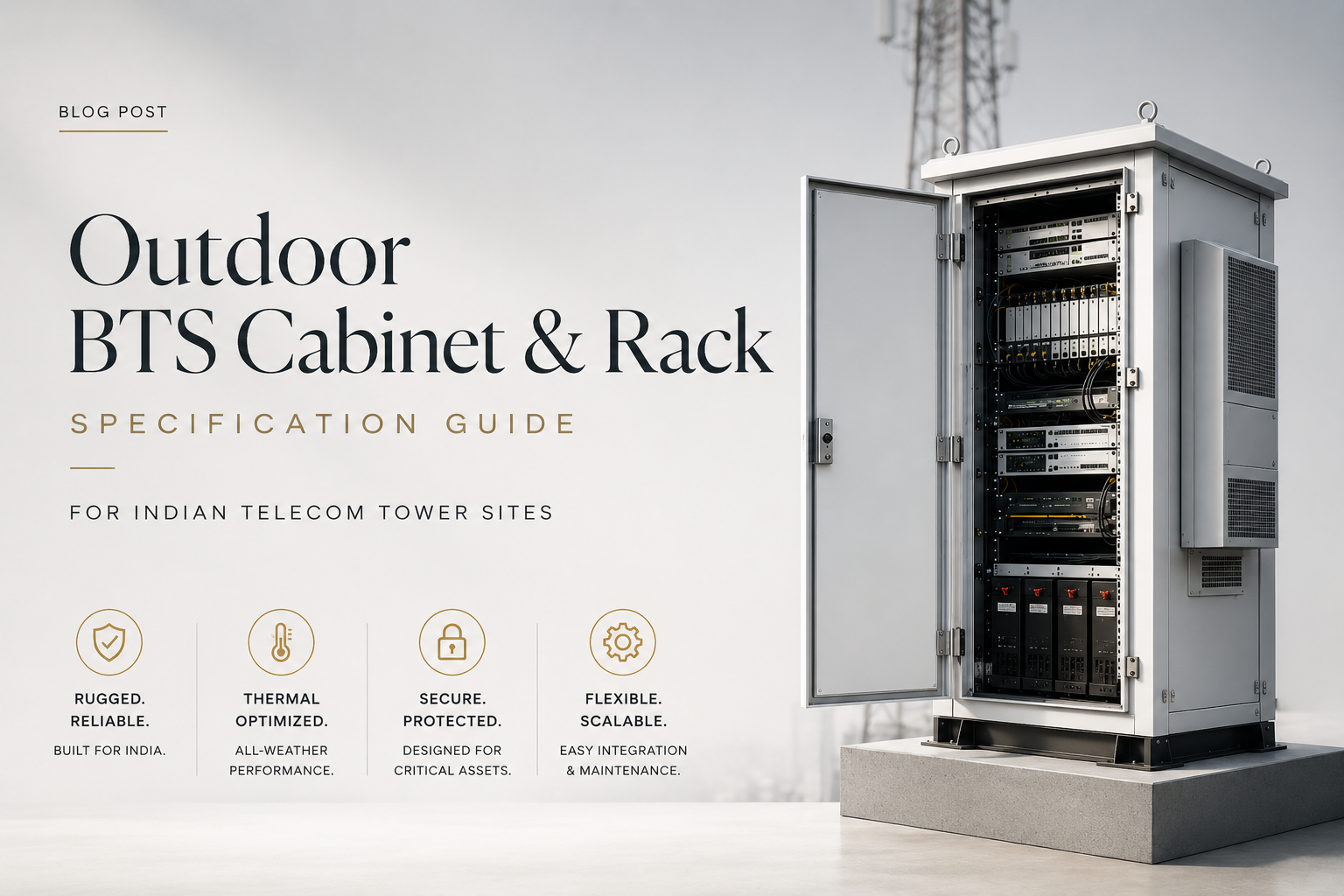
India’s telecom tower industry is in the middle of its most aggressive expansion cycle. With over 257,000 active tower sites across every state and union territory, and 5G densification accelerating through urban, semi-urban, and rural corridors, the passive infrastructure supporting each site — enclosures, battery racks, transmission cabinets — is under more scrutiny than ever.
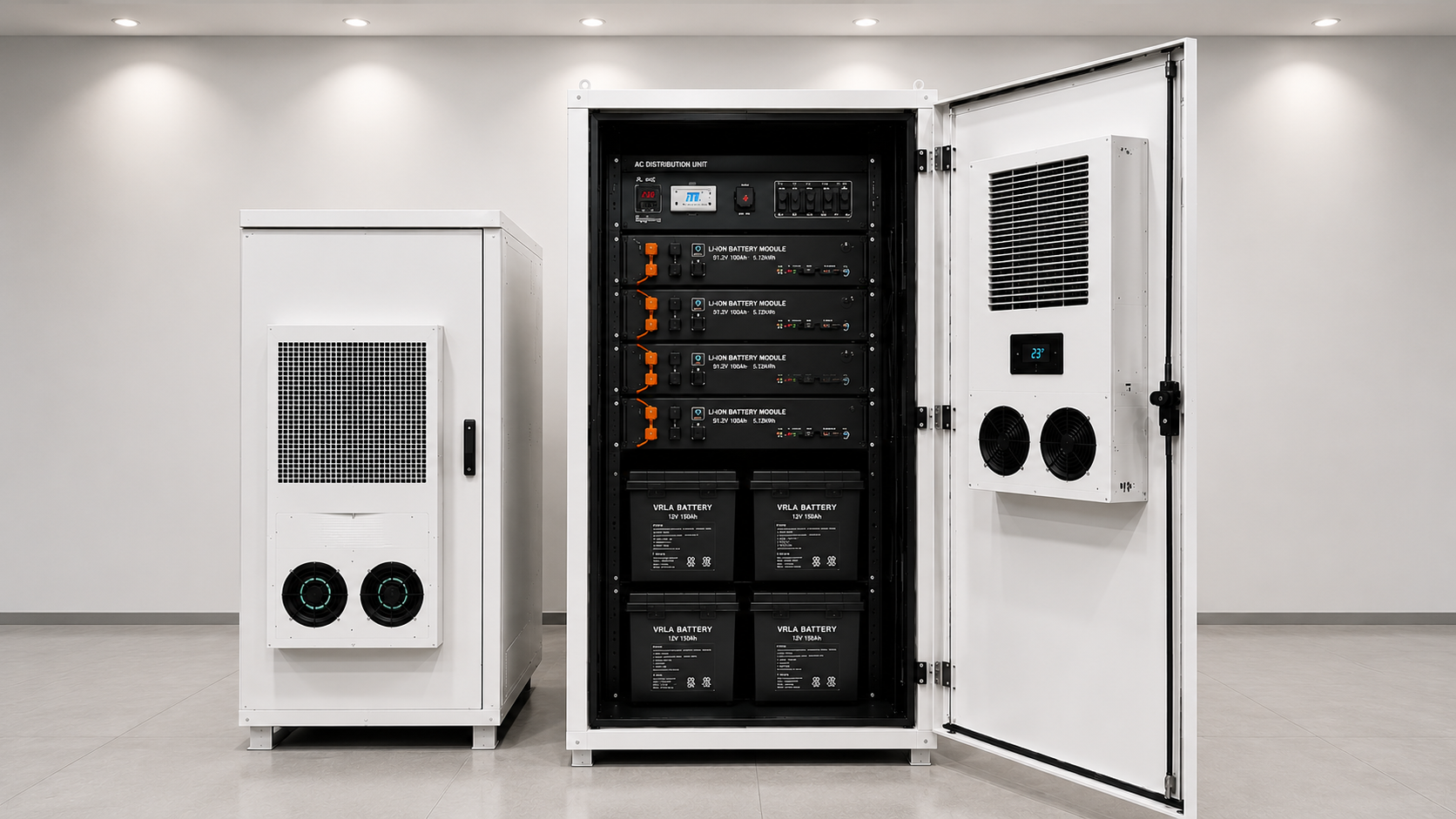
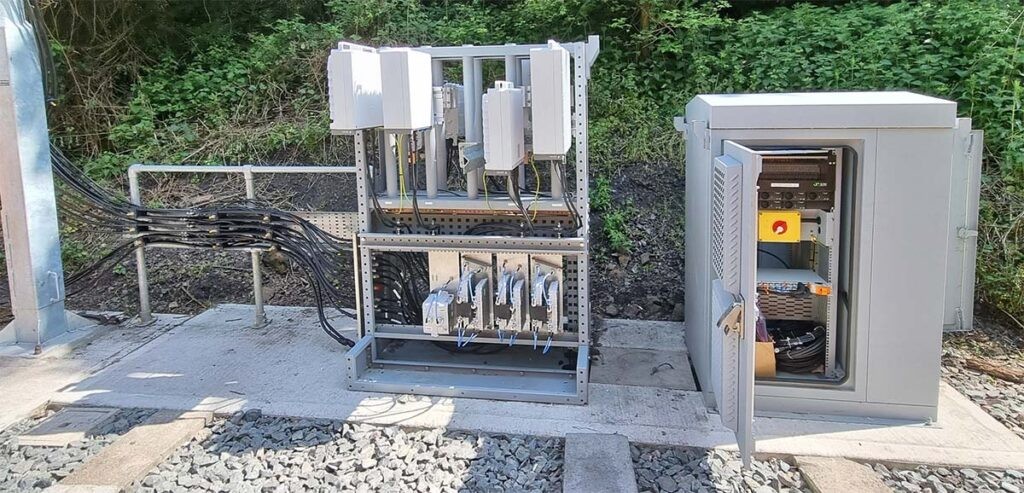
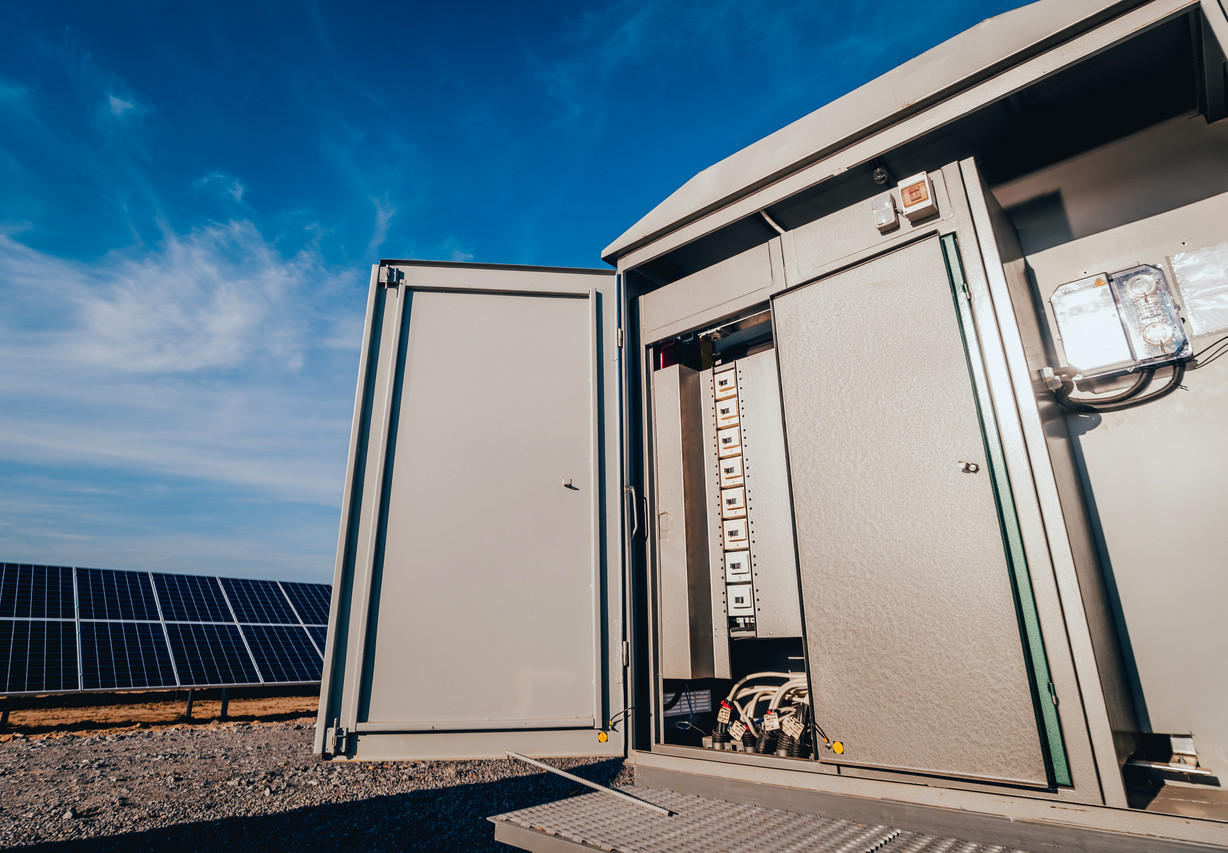
The shift from 4G to 5G isn’t just a radio upgrade. Each 5G-ready site generates significantly higher equipment heat loads (2000–5000W per site), requires larger battery backup banks for power reliability, and often demands multi-compartment outdoor cabinets that house active equipment, power distribution, and batteries — all in a single weatherproof enclosure.
The challenge for procurement teams: A cabinet that works on a coastal Kerala site will likely fail on a desert Rajasthan site without the right coating spec. A battery rack rated for Mumbai humidity won’t survive Himachal winters without thermal management. Site-specific specification is non-negotiable at scale.
India’s 4 critical deployment climate zones
Coastal
Kerala, Tamil Nadu, Goa, Odisha
Salt spray + humidity
IP66 + HDG + epoxy topcoat
Salt spray + humidity
IP66 + HDG + epoxy topcoat
Desert / Arid
Rajasthan, Gujarat, parts of MP
Heat + UV + dust
IP55 + PC + UV-resistant topcoat
Heat + UV + dust
IP55 + PC + UV-resistant topcoat
High Altitude
J&K, Himachal, Uttarakhand, NE
Cold + wind + condensation
IP66 + thermal insulation panel
Cold + wind + condensation
IP66 + thermal insulation panel
Urban / Semi-urban
Delhi, Mumbai, Bengaluru, Pune
Pollution + theft risk
IP55 + anti-vandal locking
Pollution + theft risk
IP55 + anti-vandal locking
Interactive selector — cabinet spec by site type
Select your tower site type. Get the exact cabinet and rack specification for that deployment.
GBT Site
Ground Based Tower
Rural & semi-urban
Rural & semi-urban
RTT Site
Rooftop Tower
Urban & semi-urban
Urban & semi-urban
Small Cell / IBS
Urban densification
Indoor & street pole
Indoor & street pole
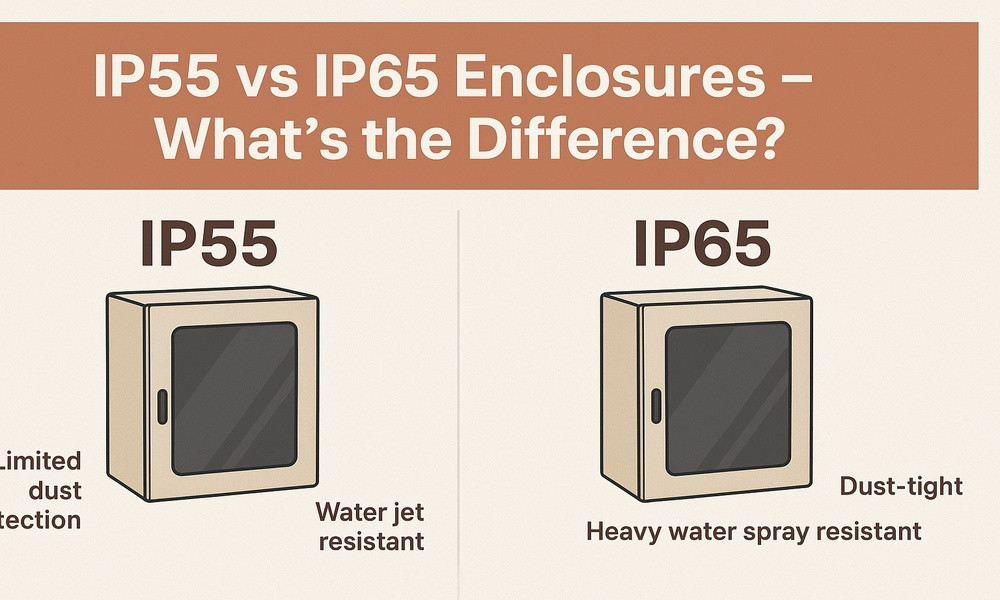
IP55 vs IP66 — which is mandatory for your site?
This is the single most-misspecified parameter in Indian tower site procurement. Choosing IP55 for a coastal or flood-prone site is not a cost saving — it’s a guaranteed field failure within 18–36 months.
| Parameter | IP55 | IP66 | When to use in India |
|---|---|---|---|
| Dust protection | Dust-protected (limited ingress allowed) | Dust-tight (zero ingress) | IP66 for desert/arid zones |
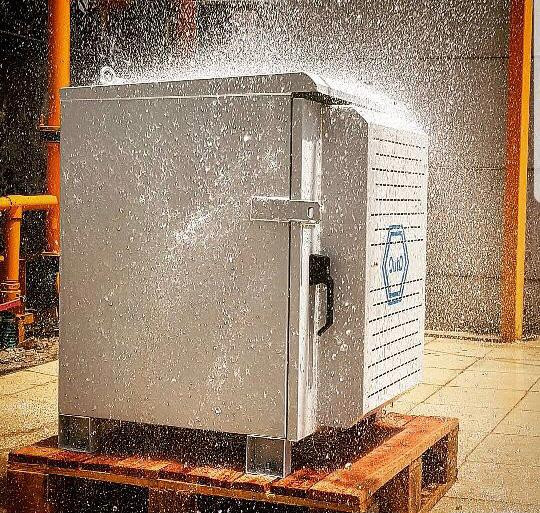
| Water protection | Low-pressure jets from any direction | High-pressure jets from any direction | IP66 for coastal, flood-prone, monsoon-heavy zones |
| Typical Indian site | Urban rooftop, indoor, low-rainfall | Coastal, GBT rural, outdoor standalone | Default to IP66 for all outdoor GBT |
| Gasket requirement | Single-layer foam/EPDM | Dual-layer EPDM + compression seal | Critical: verify gasket spec in manufacturing |
| Cable gland rating | IP55-rated glands required | IP68-rated glands required | Gland rating must match cabinet rating |
| Battery compartment | Not recommended for outdoor VRLA | Mandatory for outdoor battery racks | Never use IP55 for outdoor battery banks |
| Coating requirement | Powder coat (minimum 60–80 micron) | Hot-dip galvanized + powder coat | Coastal: HDG + epoxy topcoat mandatory |
| Test standard | IEC 60529 | IEC 60529 | Insist on test certificate with delivery |
Eterna Global Solutions rule of thumb: For any outdoor standalone cabinet on a GBT or RTT site in India — specify IP66 as default. The incremental cost is marginal; the field reliability difference is significant.
Battery rack specifications for telecom tower power backup
Every active tower site in India requires battery backup — the duration, technology, and rack specification depend on site tier, grid reliability, and the operator’s uptime SLA. Getting the rack wrong means battery degradation, safety hazards, and maintenance escalation.
VRLA / Lead-acid battery rack
Standard across existing 4G and legacy sites. Heavy, requires acid-resistant surfaces.
Li-ion battery rack (5G sites)
Increasingly specified for 5G GBT and new builds. Lighter, but requires BMS integration and thermal management.
5G upgrade note: Sites moving from 4G VRLA to 5G Li-ion often need a complete battery rack replacement — not just a battery swap. The rack structure, earthing, ventilation, and BMS provisions are fundamentally different.
Full spec comparison: GBT vs RTT vs Small Cell cabinet requirements
Use this table during vendor evaluation, tender preparation, or site-type-specific procurement planning.
| Specification | GBT Site Cabinet | RTT Site Cabinet | Small Cell / IBS Cabinet |
|---|---|---|---|
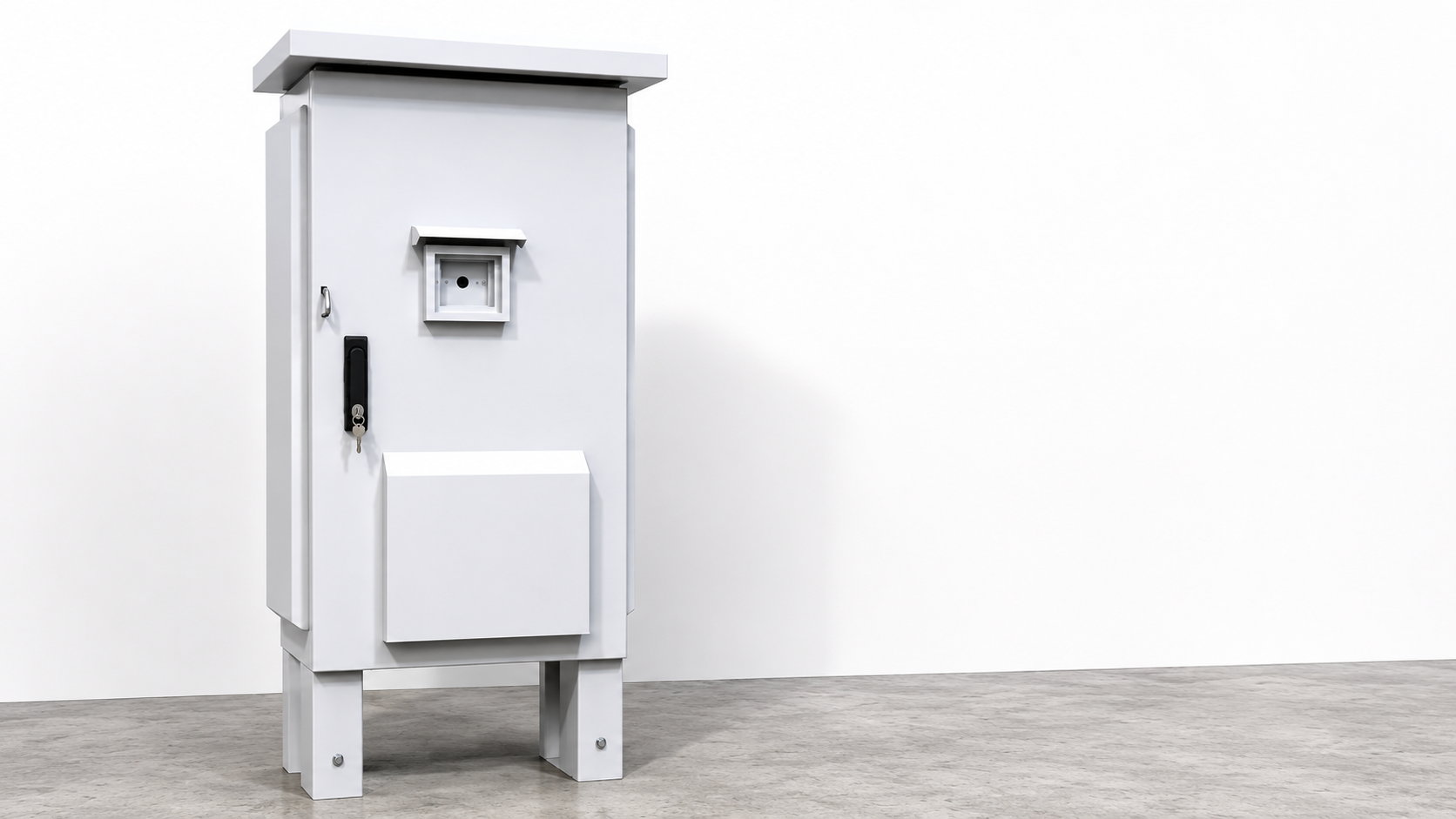
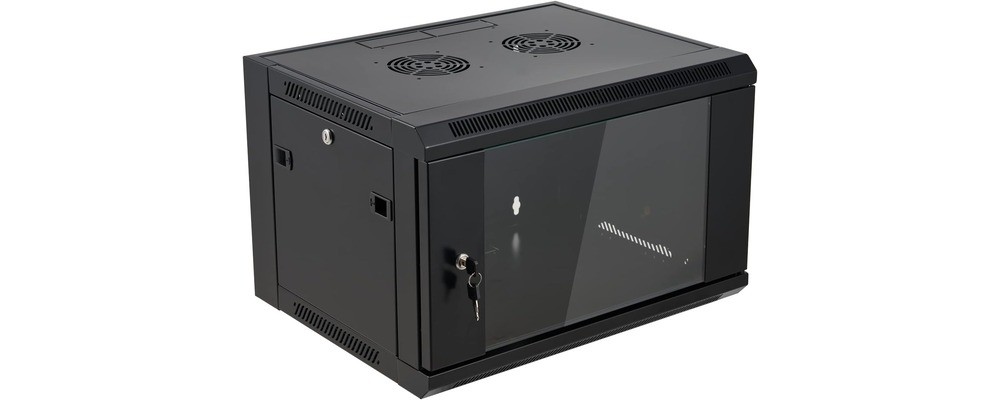
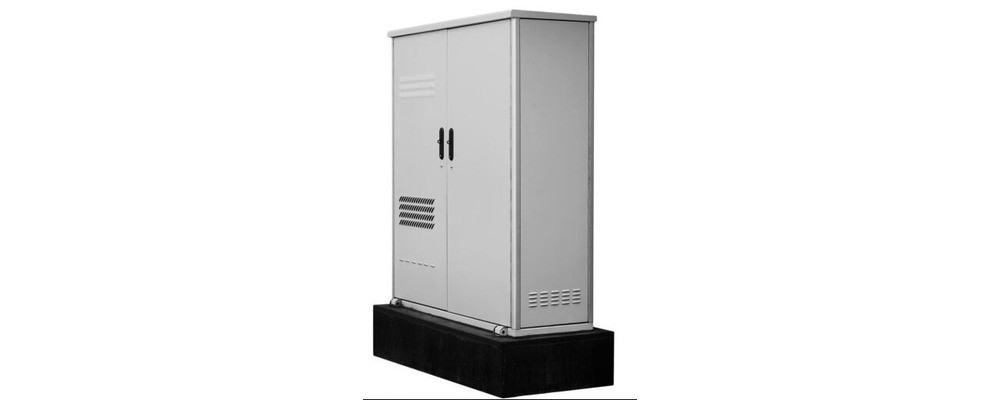
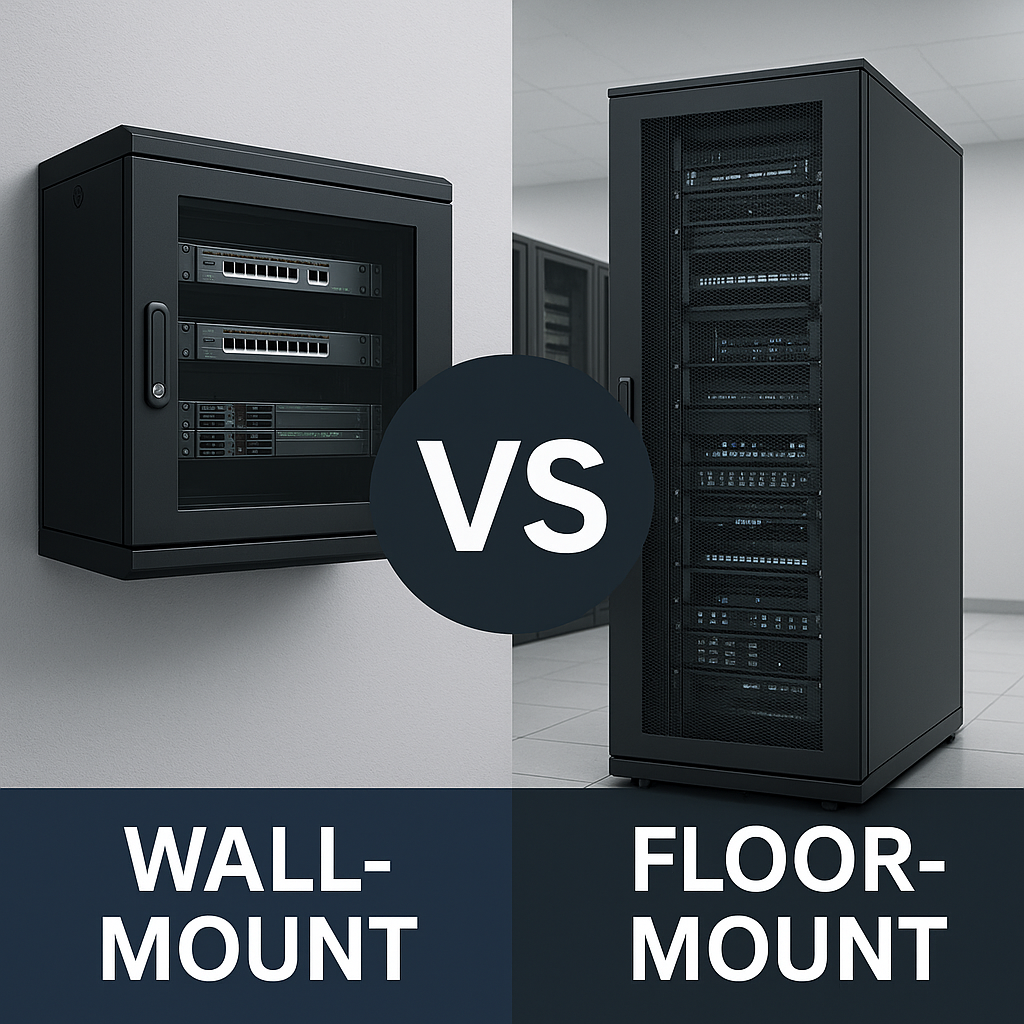
| Cabinet type | Standalone outdoor floor-mount, multi-compartment | Outdoor wall-mount or compact floor-stand | Street pole mount or wall-mount compact enclosure |
| Typical size | H2000 × W600 × D600mm (2-compartment) | H1200 × W600 × D400mm | H600 × W400 × D300mm |
| IP rating | IP66 (mandatory) | IP55 minimum, IP66 for coastal | IP66 (exposed to weather) |
| Material | GI / SS316 for coastal; CRCA + HDG for inland | CRCA + powder coat | Aluminum or SS304 (lightweight, anti-vandal) |
| Coating | Hot-dip galvanized + epoxy PC (coastal); PC 80+ micron (inland) | Powder coat 60–80 micron, RAL 7035 | Anodized aluminum or PC RAL 7035 |
| Thermal management | Integrated AC (1500–3000W) or heat exchanger | Filtered fan ventilation or passive | Passive (low heat load equipment) |
| Battery compartment | Separate lower compartment, IP66, acid-resistant | Integrated or separate battery box | No internal battery (external power source) |
| Cable entry | Bottom-entry with IP68 glands, EMC bonded | Bottom or rear entry with IP55 glands | Top or rear entry with IP66 glands |
| Locking | 3-point compression lock, padlock provision | Quarter-turn + padlock provision | Anti-vandal hex-key + padlock hasp |
| Mounting | Anchor bolt foundation (four-point) | Wall bracket + anti-theft anchor | Pole clamp or wall bracket |
| Wind loading | Designed for 170+ kmph (per IS:875 Part III) | 120 kmph minimum | 120 kmph minimum |
| Finish colour | RAL 7035 (light grey) or site-specific | RAL 7035 or operator colour | RAL 7035 or urban camouflage finish |
| Inspection document | IP test cert + coating thickness report + dimensional report | IP test cert + CoC | IP test cert + weight certification |
Procurement shortcut: Ask any cabinet supplier for one recent IP test certificate + coating thickness measurement report + dimensional inspection record. If they can’t produce all three within 24 hours, the quality system isn’t production-grade.
Climate zone coating specification matrix
India’s geography demands zone-specific coating systems. A standard powder coat that performs perfectly in Delhi can fail within 2 years on a Kerala coastal site. This matrix maps climate zones to the correct coating specification for 15+ year field life.
| Climate zone | States / regions | Primary threat | Coating spec | Minimum micron thickness |
|---|---|---|---|---|
| Coastal / Marine | Kerala, Goa, Tamil Nadu coast, Odisha coast, Maharashtra coast | Salt spray, high humidity, chloride corrosion | Hot-dip galvanized (HDG) + epoxy primer + polyurethane topcoat | HDG: 85–100μm — Topcoat: 80μm |
| Inland / Urban | Delhi, Bengaluru, Hyderabad, Pune, UP, MP | Industrial pollution, urban particulates, moderate rain | Zinc phosphate primer + polyester powder coat | 60–80μm total DFT |
| Desert / Arid | Rajasthan, Gujarat (interior), Kutch | UV degradation, extreme heat (55°C+), sand abrasion | Epoxy primer + UV-stabilized polyester powder coat | 80–100μm + UV stabilizer additive |
| High altitude / Hill | J&K, Himachal Pradesh, Uttarakhand, Sikkim, NE states | Freeze-thaw cycles, condensation, wind-driven rain | HDG + moisture-cure polyurethane coat | HDG: 85μm — PU topcoat: 60μm |
| High rainfall / Tropical | Assam, Meghalaya, Kerala interior, Western Ghats | Continuous moisture, biological growth, fungal attack | HDG + anti-fungal epoxy topcoat | HDG: 85μm — Epoxy: 80μm |
Eterna practice: We specify coating system based on site GPS coordinates, not just state. A site 500m from the coast and a site 5km inland have very different corrosion exposure — we build both into the spec before manufacturing begins.
Towerco vendor qualification checklist
What large-scale towercos should verify before awarding a cabinet supply contract. Use this to evaluate any supplier — including us.
Manufacturing capability
Quality system
Supply chain & delivery
Customisation & engineering
Cabinet supplier risk scanner
Already evaluating a supplier? Check what you’ve observed. Get an instant risk assessment.
Risk indicators
Risk result
Risk level: —
Meaning: —
Next step: —
Frequently asked questions
What is the difference between a GBT and RTT site cabinet? +
A GBT (Ground Based Tower) cabinet is a standalone outdoor floor-mount enclosure, typically 2000mm tall with separate equipment and battery compartments. It must be IP66-rated, structurally anchored, and engineered for the local climate. An RTT (Rooftop Tower) cabinet is more compact, usually wall-mounted or on a small floor stand, and may use IP55 for low-rainfall urban sites. The structural and thermal requirements differ significantly between the two.
Why can’t I use a standard imported cabinet for Indian tower sites? +
Indian tower sites span extreme climates — from 55°C desert heat in Rajasthan to sub-zero temperatures in Himachal, coastal salt spray in Kerala to monsoon flooding in Assam. Standard imported cabinets are typically designed for temperate European or North American climates. They lack the climate-specific coating systems, wind loading calculations per IS:875, and thermal management sizing required for Indian conditions. Field failures within 24–36 months are common with non-India-spec cabinets.
What is the recommended battery rack spec for 5G GBT sites in India? +
For 5G GBT sites using Li-ion backup: IP66-rated outdoor battery cabinet, forced-air or heat exchanger cooling, BMS mounting provision, fire-rated inner panel, temperature sensor mounting points, and dedicated earth bonding. For sites still using VRLA: acid-resistant epoxy-coated shelves, ventilation gaps between tiers, spill containment trays, and IP55 minimum for outdoor installations. Always specify the rack to match the battery chemistry — a VRLA rack cannot simply be reused for Li-ion.
How should cabinet specifications differ for coastal vs inland tower sites? +
Coastal sites (within 5km of the sea) require hot-dip galvanized frames with an epoxy primer and polyurethane topcoat — minimum HDG 85 micron + topcoat 80 micron. Standard powder coat alone will fail within 2–3 years in salt-spray environments. Inland sites can use zinc phosphate primer + polyester powder coat at 60–80 micron DFT. Desert sites additionally need UV-stabilized powder coat. Always request a salt-spray test certificate (minimum 1000 hours per ASTM B117) for coastal site cabinets.
What documents should a towerco require from a cabinet supplier? +
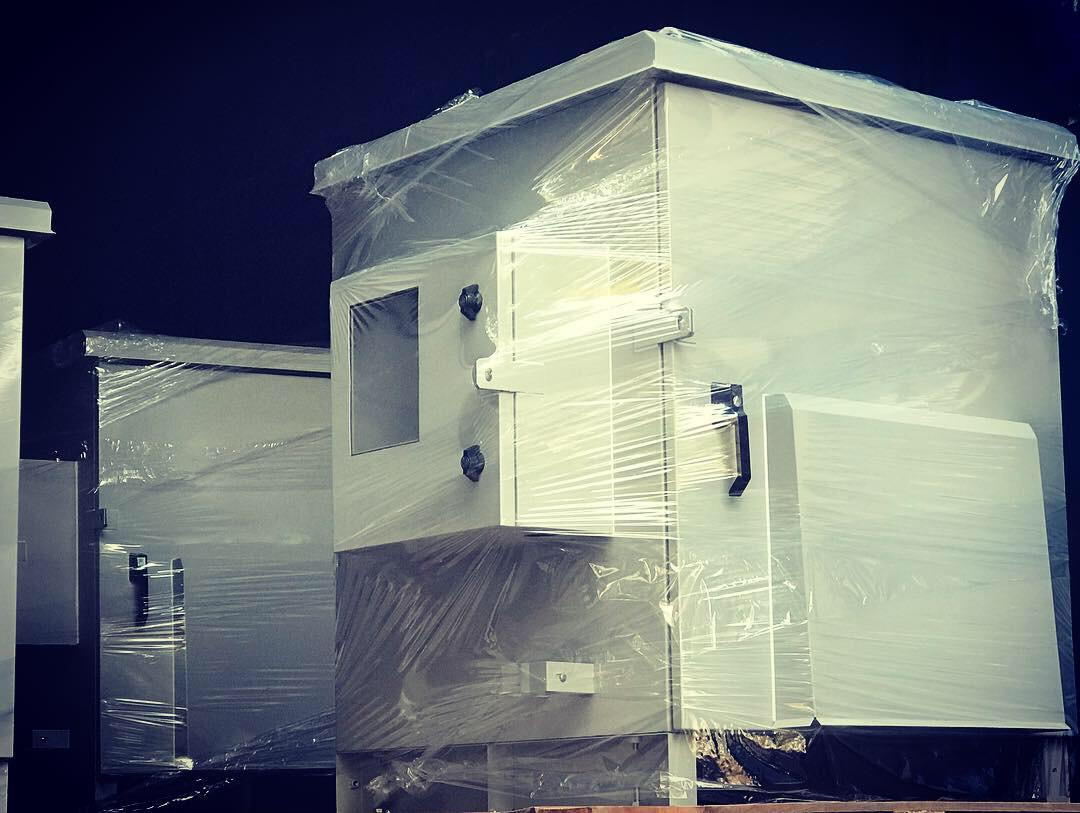
At minimum: IP test certificate for the specific cabinet model (not a generic model family), DFT (dry film thickness) coating measurement report per batch, dimensional inspection report, material traceability certificate (CoC for steel and coating materials), and packing / stacking photos for every shipment. A production-grade supplier can provide all five within 24 hours of request. If they cannot, the quality system is not adequate for large-scale towerco supply.
Can Eterna Global Solutions supply cabinets for pan-India tower deployments? +
Yes. Eterna Global Solutions manufactures outdoor BTS cabinets, battery racks, and transmission enclosures with site-specific coating systems for all Indian climate zones. We support repeat production at scale with full inspection documentation, climate-zone-specific coating specs, and engineering packaging for pan-India delivery. Submit an RFQ with your site type, climate zone, and quantity to receive a specification and manufacturing plan.



-20082508144130.jpg)
-20082508385589.jpg)



-29112509574730.jpg)


-18122502213226.png)