Eterna Global Solutions
C-52 Block-C, Sector 80
Noida Uttar Pradesh,
201306, India


Eterna Global Solutions
C-52 Block-C, Sector 80
Noida Uttar Pradesh,
201306, India
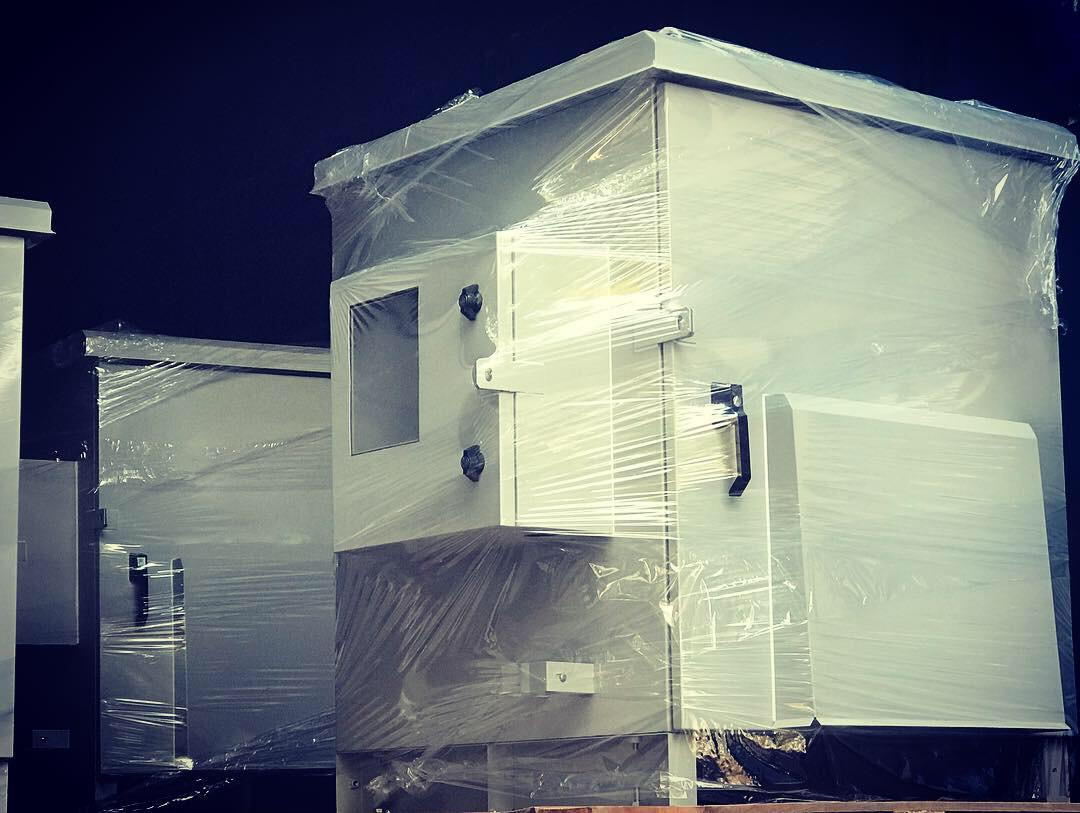
Eterna Global Solutions LLP designs and manufactures IP55, IP65, and IP66 rated sheet metal enclosures for outdoor and harsh-environment deployment — telecom street cabinets, BTS shelters, battery energy storage (BESS) housings, EV charging station cabinets, power distribution enclosures, and industrial control panels exposed to rain, dust, and extreme temperatures. IP-rated enclosure engineering is not just about adding a gasket to a standard cabinet. It is a discipline that runs through every design decision and every manufacturing process — from how the frame is welded and how the door hinges are positioned to how the cable entries are sealed and how the gasket corners are joined.
The difference between an enclosure that claims an IP rating on a datasheet and one that actually holds that rating in the field — through monsoon rains, through years of gasket ageing, through repeated door openings by field technicians — comes down to engineering details. How much gasket compression does the latch provide? Is it enough to maintain seal integrity after 5,000 door open-close cycles? Does the cable entry design allow field cabling without breaking the seal? Will the rain canopy actually divert water away from the door hinge line, or will water pool and find a path through the weakest point?
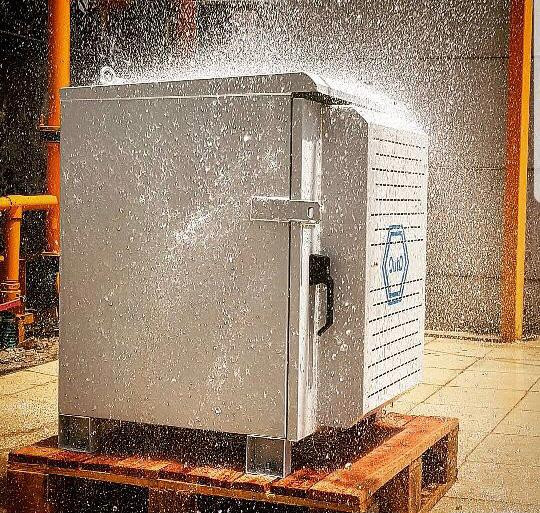
At Eterna, we address these questions during design and verify them during manufacturing. Every IP-rated cabinet we produce is individually water-tested per IEC 60529 in our in-house test facility. Not sample-tested — every single unit. Because when an outdoor cabinet leaks in the field, the cost of the water damage to the electronics inside it dwarfs the cost of the cabinet itself.
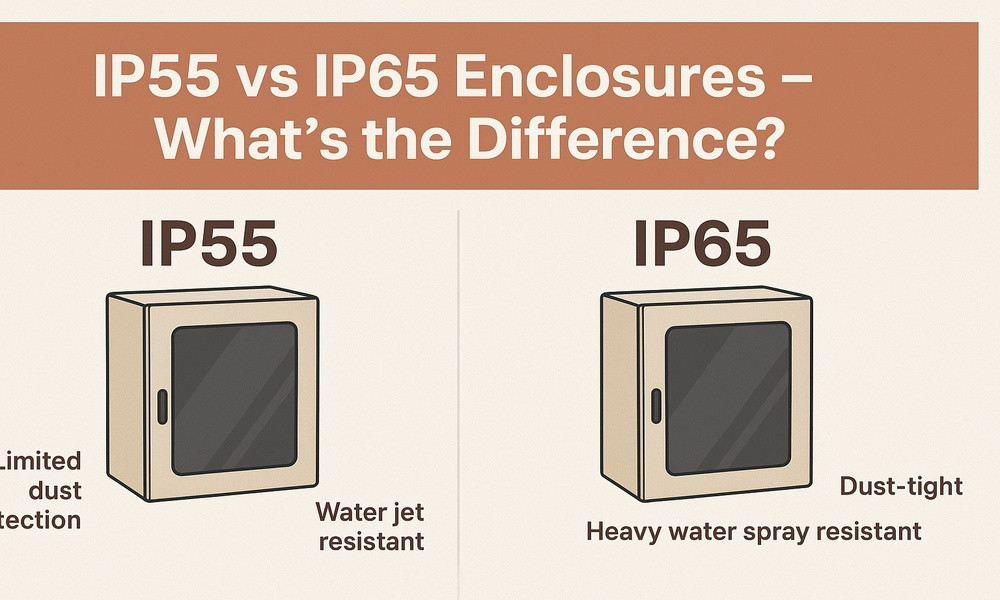
IP stands for Ingress Protection, defined by international standard IEC 60529. The two-digit code tells you exactly what the enclosure is protected against. The first digit (0–6) rates solid particle protection — from no protection (0) to completely dust-tight (6). The second digit (0–9) rates water ingress protection — from no protection (0) to high-pressure/steam jet (9). For outdoor sheet metal enclosures in India, the three ratings you will encounter most often are IP55, IP65, and IP66.
IP55: Protected against dust ingress (sufficient to prevent harmful accumulation) and low-pressure water jets from all directions. Suitable for sheltered outdoor locations, semi-outdoor areas, covered installations, and environments with moderate dust and occasional water exposure.
IP65: Dust-tight (no dust ingress) and protected against low-pressure water jets from all directions. The most commonly specified rating for outdoor telecom cabinets and roadside enclosures in India. Handles monsoon rain, dust storms, and continuous outdoor exposure.
IP66: Dust-tight and protected against powerful water jets (higher pressure and flow rate than IP65). Required for enclosures in extremely exposed locations — coastal sites with wind-driven rain, rooftop installations, or locations where high-pressure cleaning is used.
The door gasket is the single most critical element of IP integrity. A gasket that is too soft won’t resist water pressure; too hard and it won’t compress enough to seal against surface irregularities. The gasket profile, material, compression ratio, and corner-joint method must all be right.
Cable entries are the second most common failure point for IP integrity. Every hole in the enclosure wall is a potential leak path — and outdoor cabinets typically have many cables entering from below or through side panels.
The door is the largest opening in the enclosure and the largest area of gasket seal. How the door is hinged, how many latch points there are, and how evenly the latch force distributes gasket compression across the entire door perimeter all determine whether the seal works.
Outdoor enclosures house heat-generating equipment but must remain sealed against water and dust. This creates a fundamental tension between thermal management and IP integrity. Every ventilation opening is a potential IP failure.
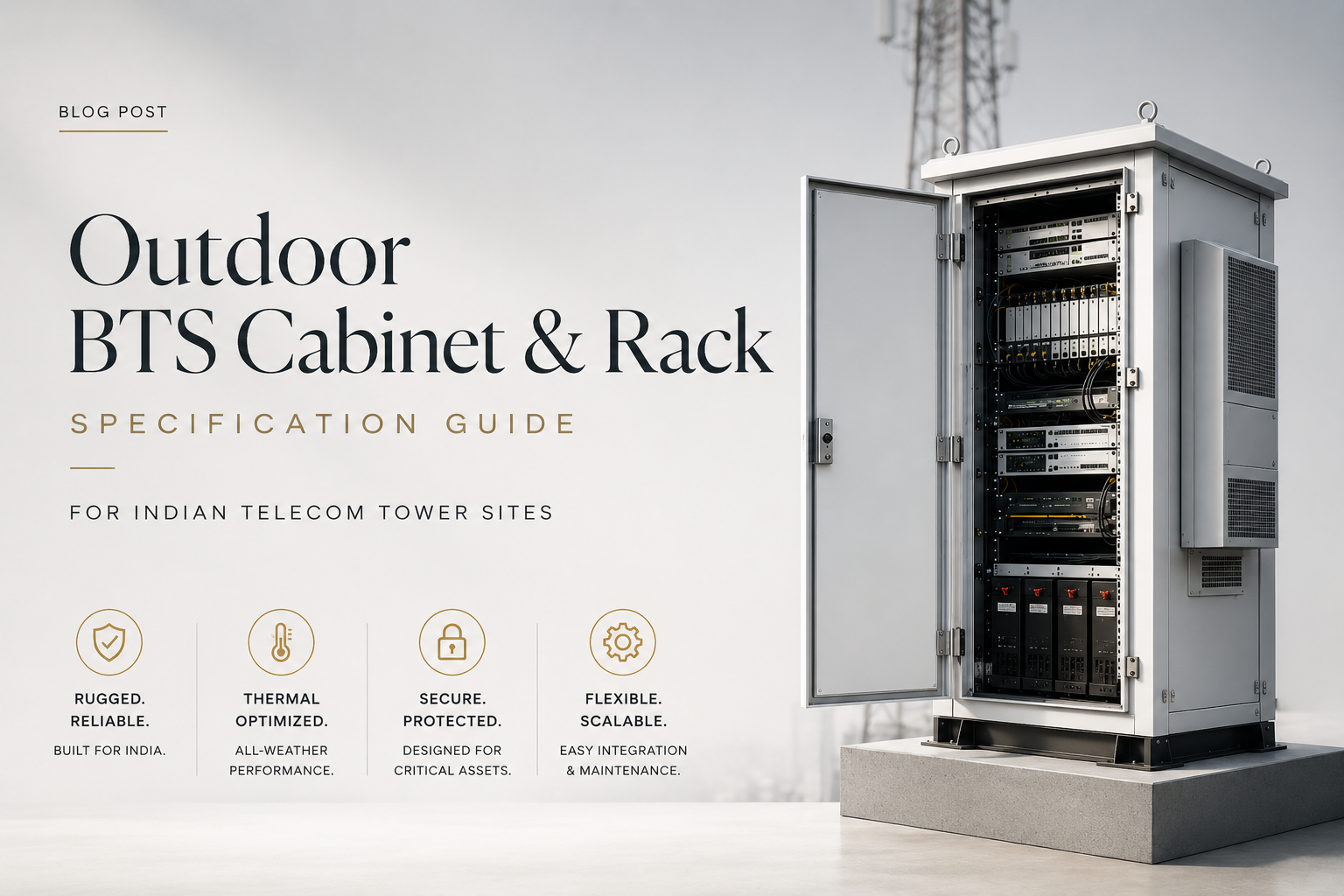
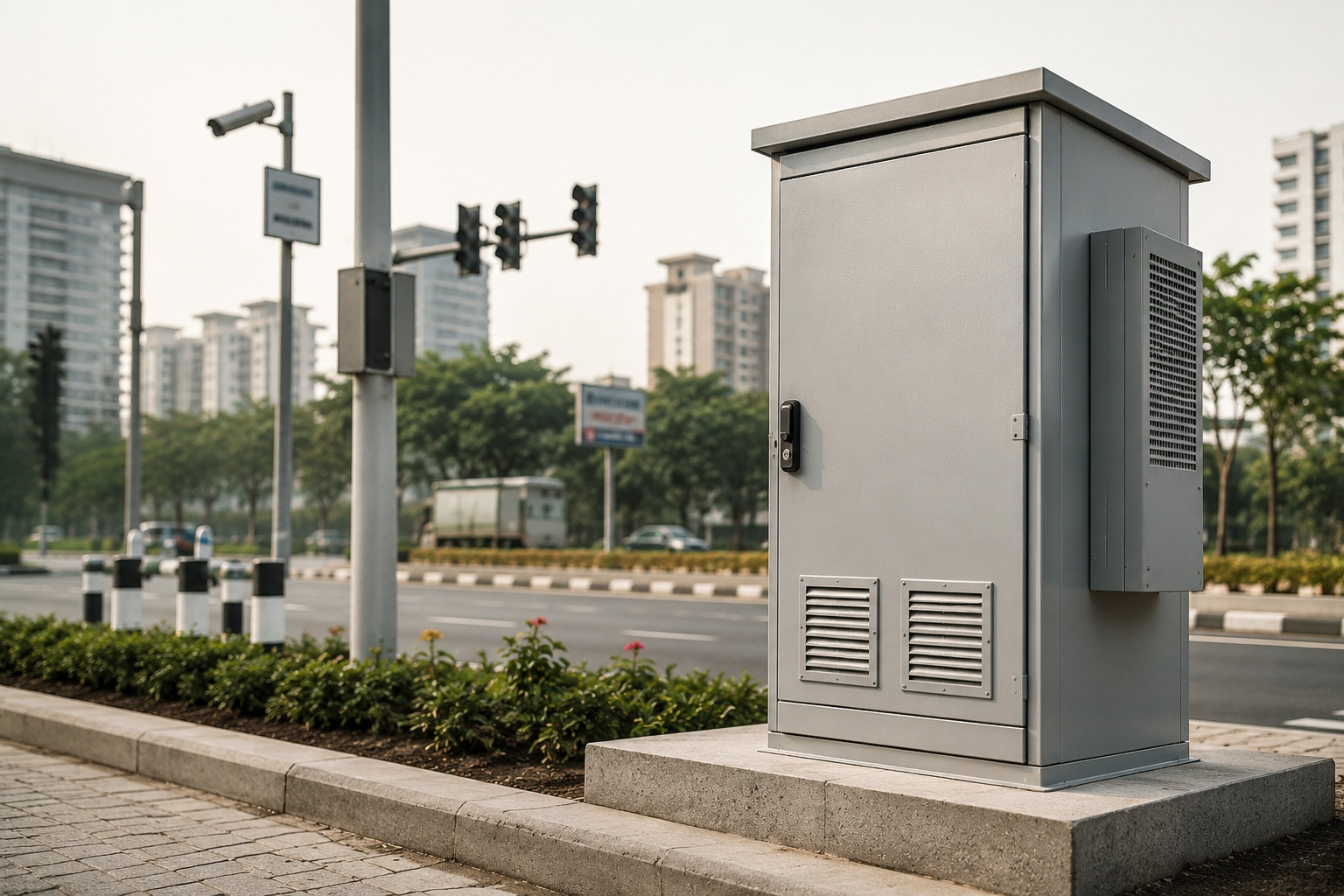
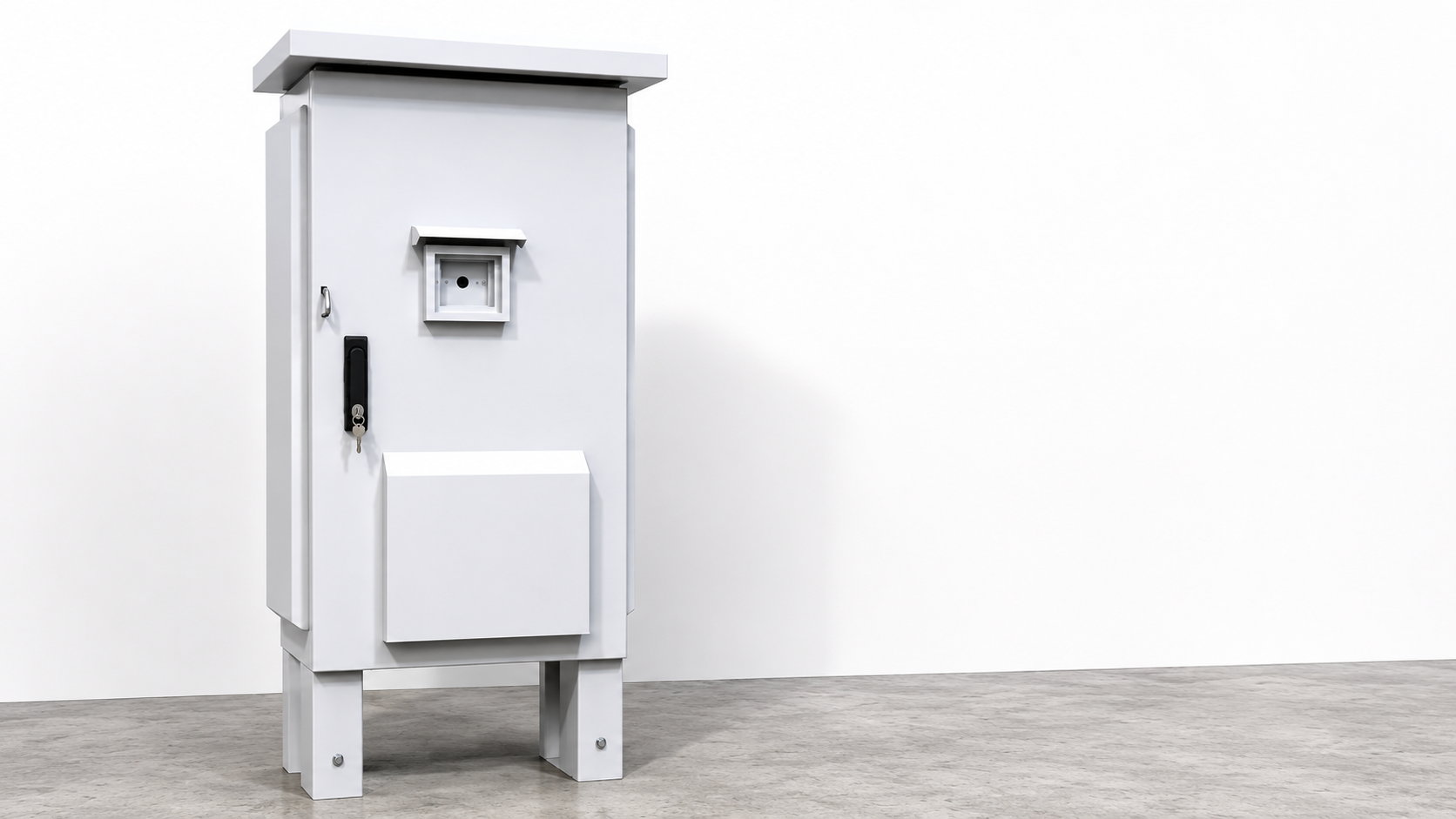
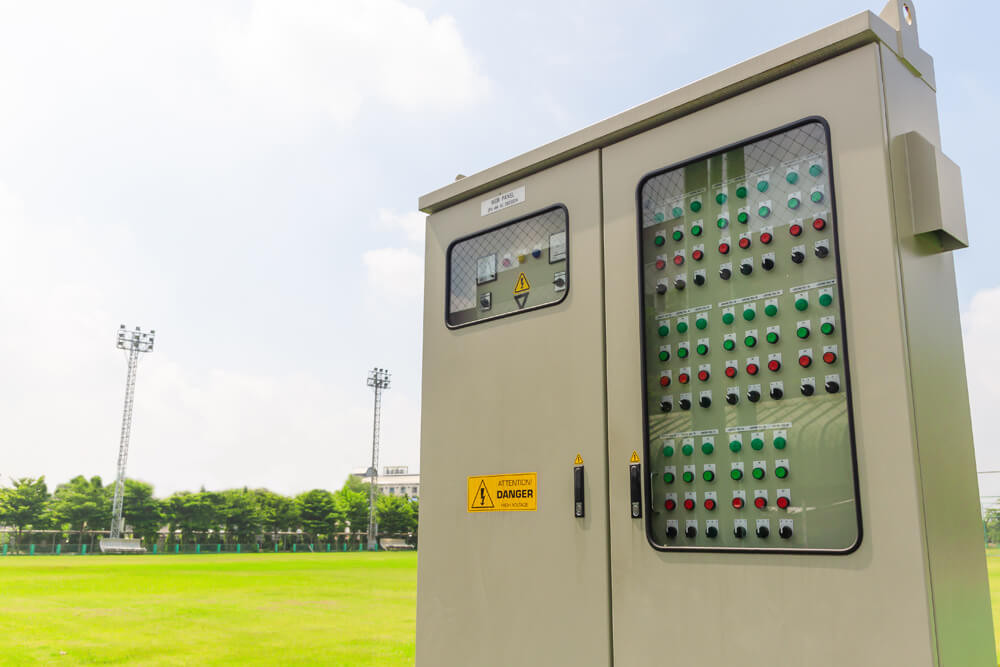
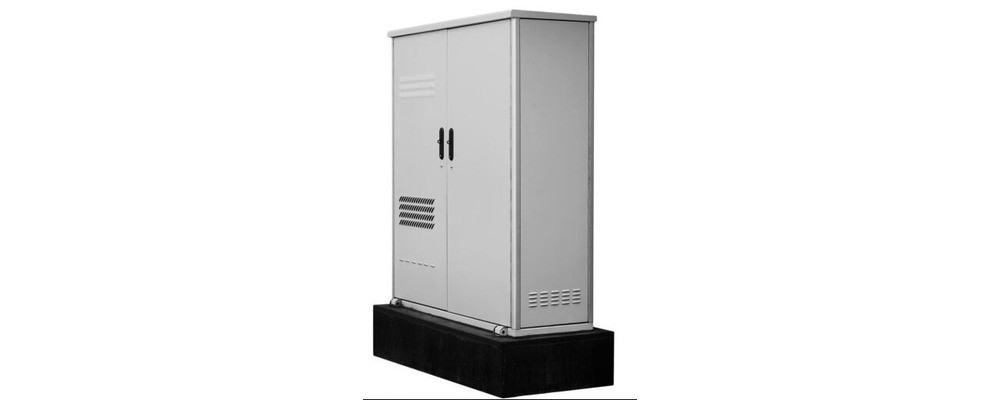
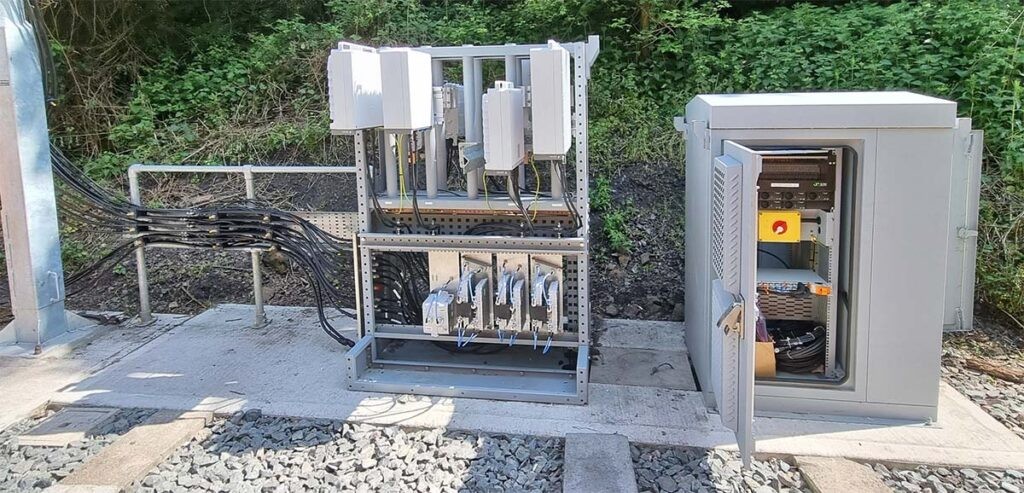
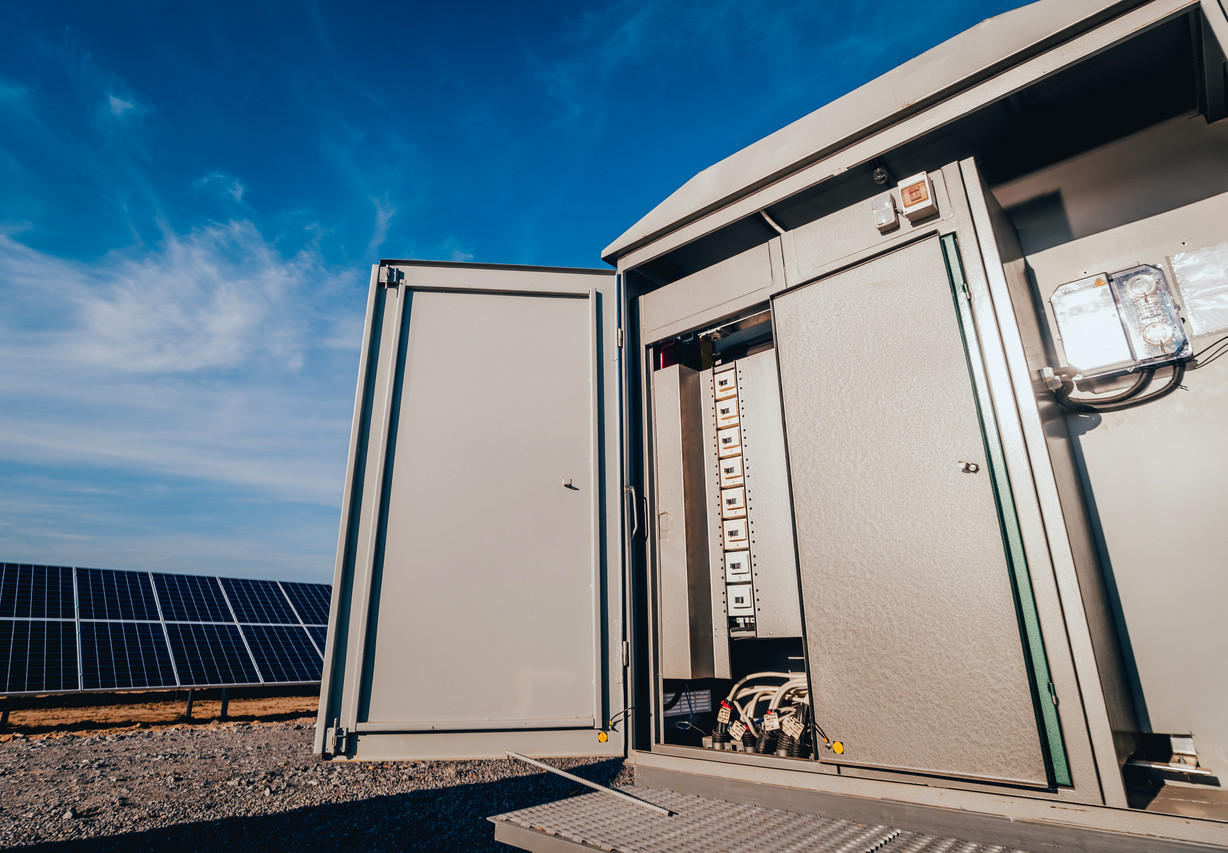
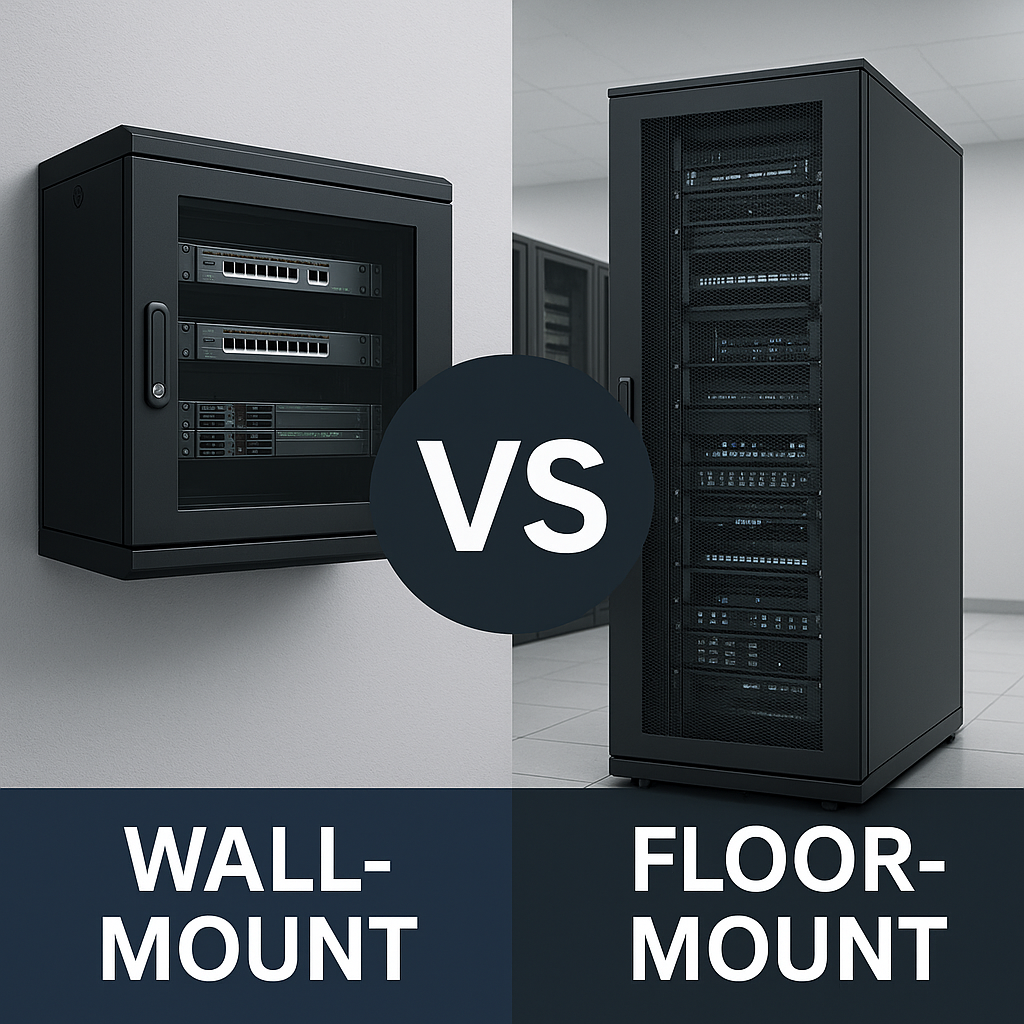
IP65 and IP66 street cabinets, roadside cabinets, and equipment shelters for telecom operators and network infrastructure OEMs. Floor-standing or wall-mounted configurations. Single-door or double-door. Integrated with power distribution (MCBs, SPDs, fuse holders), cable management, earth bars, and thermal management. RAL 7032 (silica grey) standard. Bottom cable entry with gland plates. Rain canopy standard on floor-standing models. Designed for Indian telecom deployment: remote sites, limited access roads, high temperature, heavy monsoon exposure, field-serviceable by technicians with basic tools.
Battery & energy storage (BESS) enclosures
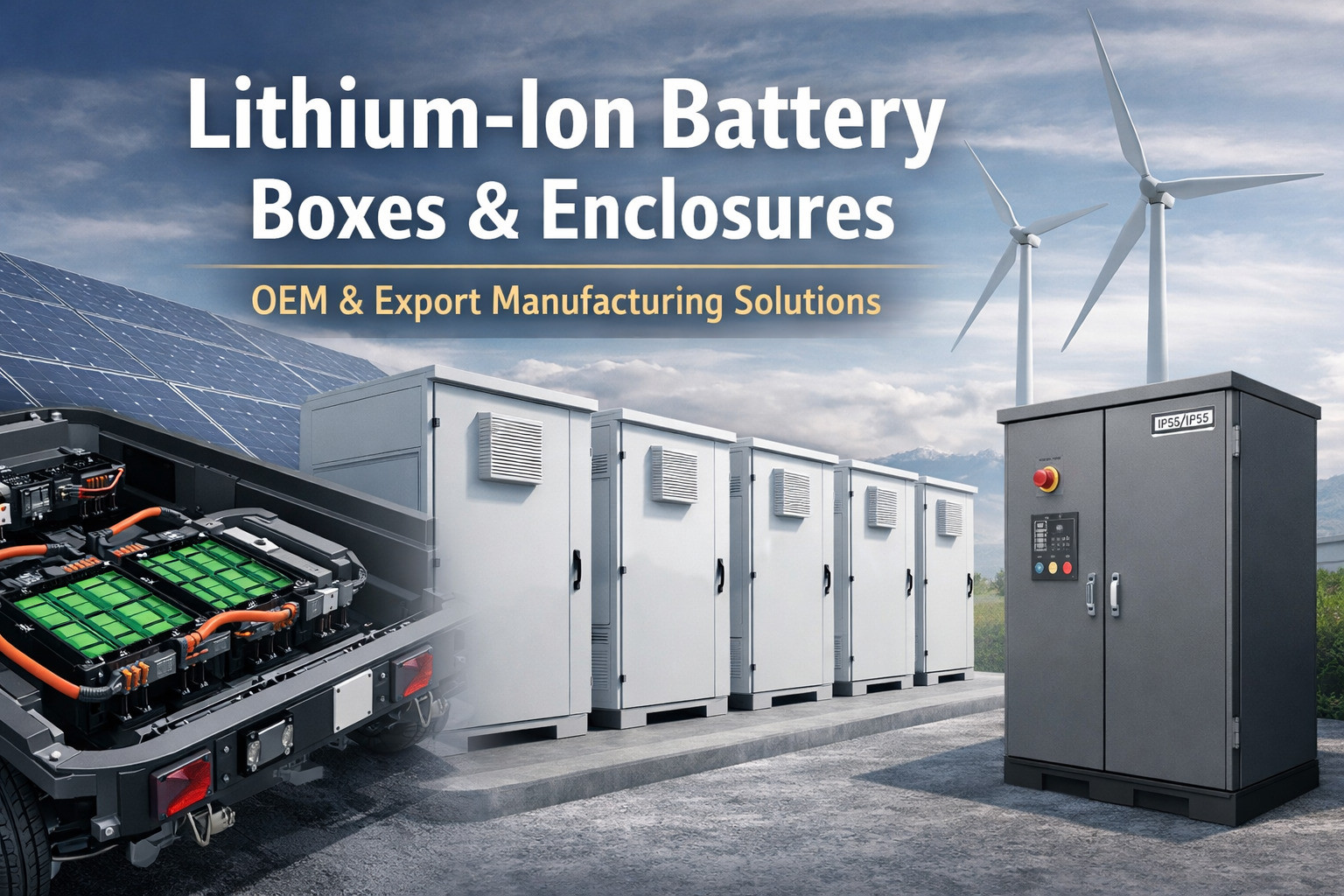
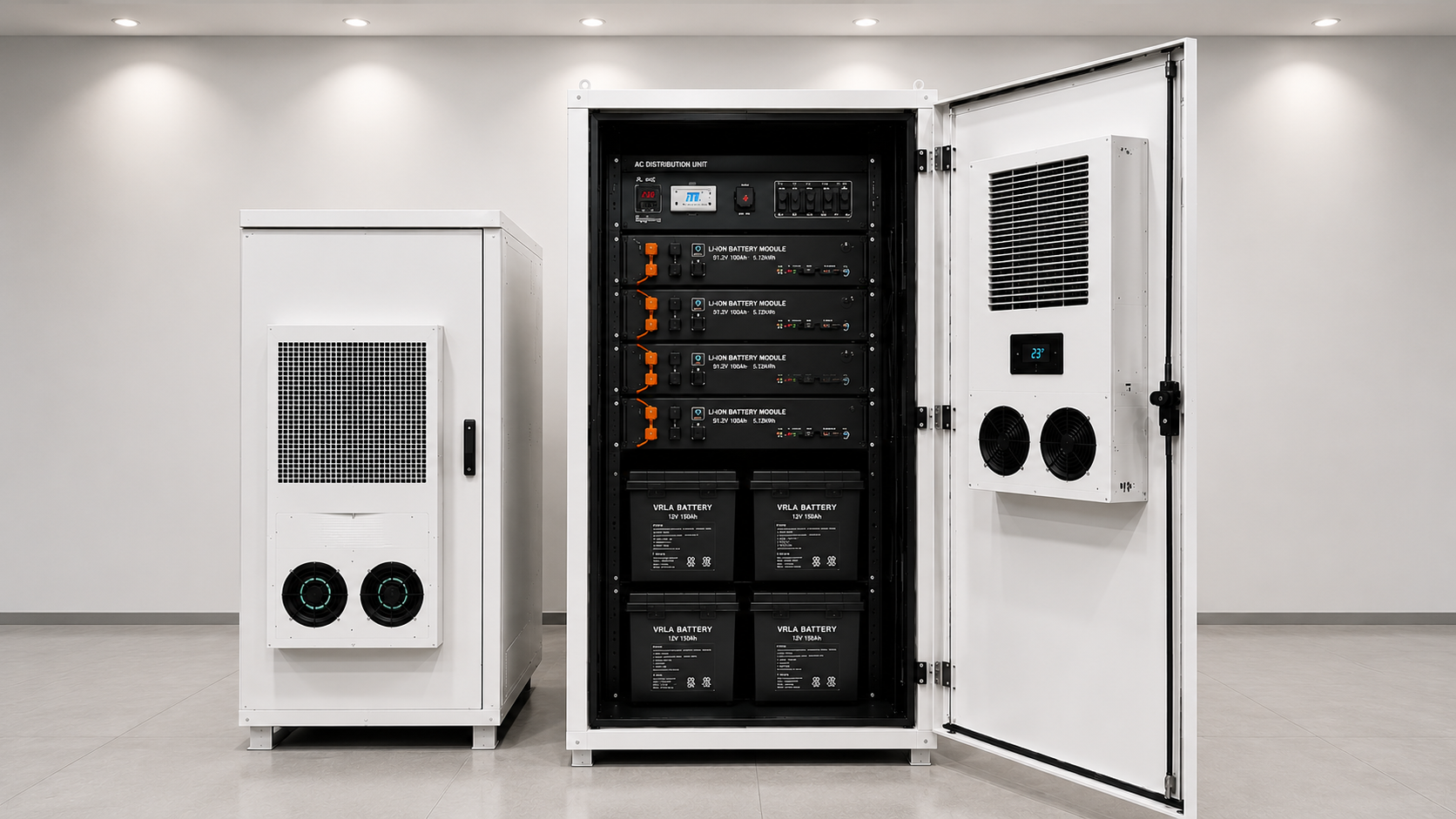
IP55–IP66 enclosures for lithium-ion battery modules, lead-acid battery banks, supercapacitor arrays, and hybrid storage systems. Heavy-gauge construction (2.0–3.0 mm) for structural load requirements. Compartmentalised interior for thermal management and safety isolation. Ventilation or sealed design per thermal analysis. Cable entries sized for high-current DC cabling. RAL 7016 (anthracite grey) standard.
IP55–IP65 outdoor power distribution cabinets, feeder pillars, metering enclosures, and switch-fuse units. Pre-wired with busbars, MCBs, contactors, and metering CTs. Earth bar and bonding per IS 3043. Suitable for roadside deployment, industrial sites, and utility substations.
EV charging station cabinets
IP65 enclosures for EV charger power electronics and control systems. Designed around specific charger module dimensions and thermal profiles. Cable entries for AC input, DC output to charging gun, and communication/networking cables. Stainless steel or powder-coated GI for public-facing installations.
Industrial control & junction boxes
IP55–IP66 wall-mounted and floor-standing enclosures for process control, motor control, and instrumentation in industrial plants, water treatment facilities, and mining operations. Sized from small junction boxes (300 × 300 mm) to full-height control panels. Stainless steel 304/316 available for corrosive environments.
Preparation: Fully assembled cabinet with all doors closed, latches engaged, cable glands tightened to specified torque, and blanking plugs installed on unused entries. Cabinet positioned in the test area.
Water application: Pressurised water jets directed at the cabinet from all sides per the requirements of the specified IP level — IP55 (low-pressure jets), IP65 (low-pressure jets, same spray pattern but enclosure must also be dust-tight), IP66 (powerful jets at higher pressure). Test duration per IEC 60529 for the respective protection level.
Post-test inspection: Cabinet opened and interior surfaces visually inspected for any moisture. Particular attention to door corners, hinge side, cable gland area, and any panel joints. Result recorded on the unit’s quality checksheet.
Failure handling: If any moisture is found inside, the failure point is identified, the seal is repaired (gasket re-seated, gland re-torqued, sealant re-applied at gasket corner, hinge adjusted), and the unit is re-tested until it passes. No unit ships until it passes water testing.
We test every single IP-rated unit because IP integrity is assembly-dependent, not just design-dependent. The same cabinet design can pass or fail depending on:
Gasket seating: A gasket that is 2 mm displaced from its channel at one corner will leak. This is an assembly variable, not a design variable. You cannot predict it from the first unit; you must verify it on every unit.
Cable gland torque: A cable gland tightened to 3 Nm seals perfectly. The same gland at 1.5 Nm leaks. Torque control varies between assemblers and across a production shift.
Latch engagement: If one latch point doesn’t fully engage (latch cam slightly misaligned, door hinge marginally off), gasket compression at that zone is insufficient and water enters under jet pressure.
Sealant application: Gasket corner joint sealant must be applied correctly — too little = leak path through the joint; too much = sealant squeeze-out that looks bad and can prevent proper gasket compression.
These are all variables that exist on every unit, not just a statistical sample. That is why 100% testing is the only reliable approach for IP-rated outdoor enclosures.
Galvanised steel (GI - IS 277): Pre-galvanised sheet provides a zinc barrier against corrosion underneath the powder coat. If the coating is scratched or chipped in the field, the zinc layer provides secondary protection. Standard for telecom and power distribution outdoor cabinets.
Stainless steel (AISI 304/316): For coastal, chemical, or highly corrosive environments where galvanised steel is not sufficient. 316 grade for marine/salt-spray exposure. Higher cost but significantly longer service life in aggressive environments.
Polyester powder coat: Outdoor-grade polyester powder (Interpon, Asian Paints PPG, Jotun) provides UV resistance, colour retention, and corrosion protection for 10+ years of outdoor exposure. Minimum 60–80 µm DFT. The conveyorised pre-treatment (degrease, phosphate, passivate) before coating ensures adhesion to the substrate.
Rain canopy: An overhanging canopy above the door diverts rainwater away from the door-to-frame seal, reducing the direct water load on the gasket. Standard on floor-standing outdoor cabinets.
Raised plinth / base: Elevating the cabinet above ground level prevents water pooling at the base during heavy rain or flooding. Standard 100 mm plinth on floor-standing models; higher available per site conditions.
Drip edges and water channelling: Formed drip edges along the top of the enclosure and above cable entry areas direct water away from seal lines and joints.
Gasket replacement: Gaskets are designed for easy field replacement. After years of UV exposure and thermal cycling, gaskets degrade — replacement should be a simple maintenance task, not a factory return. We supply replacement gasket kits for installed cabinets on request.
Condensation management: Sealed outdoor enclosures experience internal condensation when temperature drops rapidly (e.g., evening in tropical climates). Breather valves or heaters prevent moisture build-up inside sealed enclosures without compromising IP rating.
Share your requirements — IP level, dimensions, equipment, deployment environment — and we respond with a design proposal or manufacturing quote within 48–72 hours.





-20082508144130.jpg)
-20082508385589.jpg)



-29112509574730.jpg)


-18122502213226.png)