
Server Rack Buying Guide • Eterna Global Solutions • Noida
Interactive selector — find your rack in 60 seconds
Click your rack type. Answer 3 questions. Get Eterna’s recommendation with full specifications.
Open Frame Rack
No panels, no doors. Maximum airflow and access.
Max Airflow Easy Access Lighter
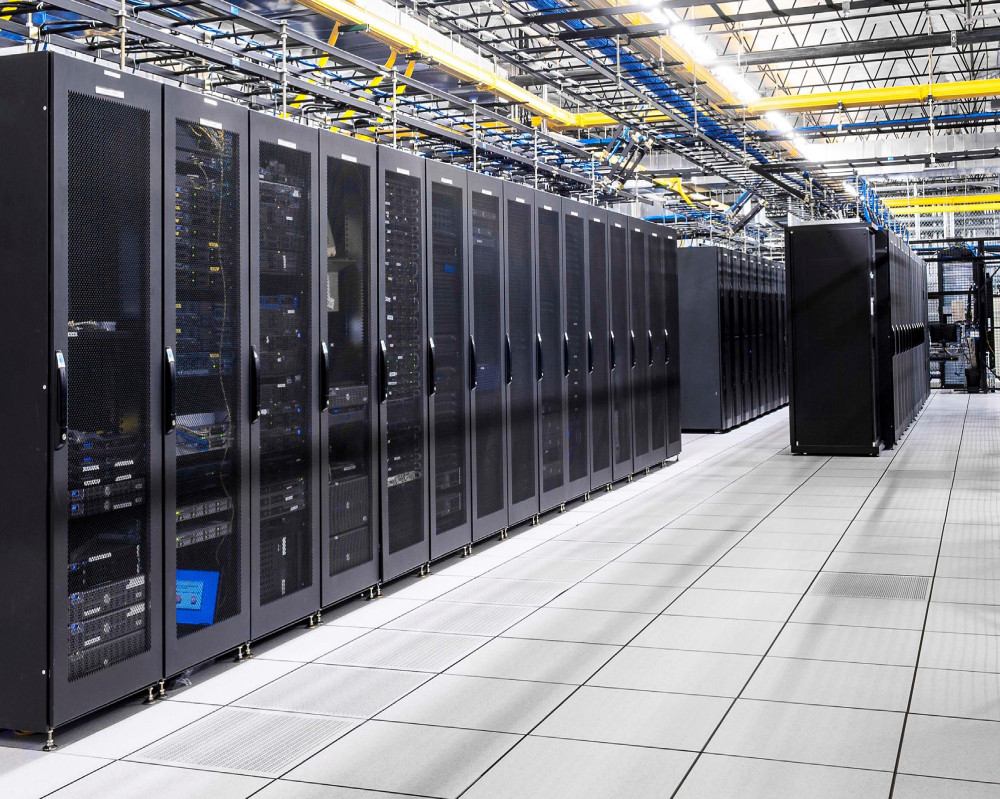
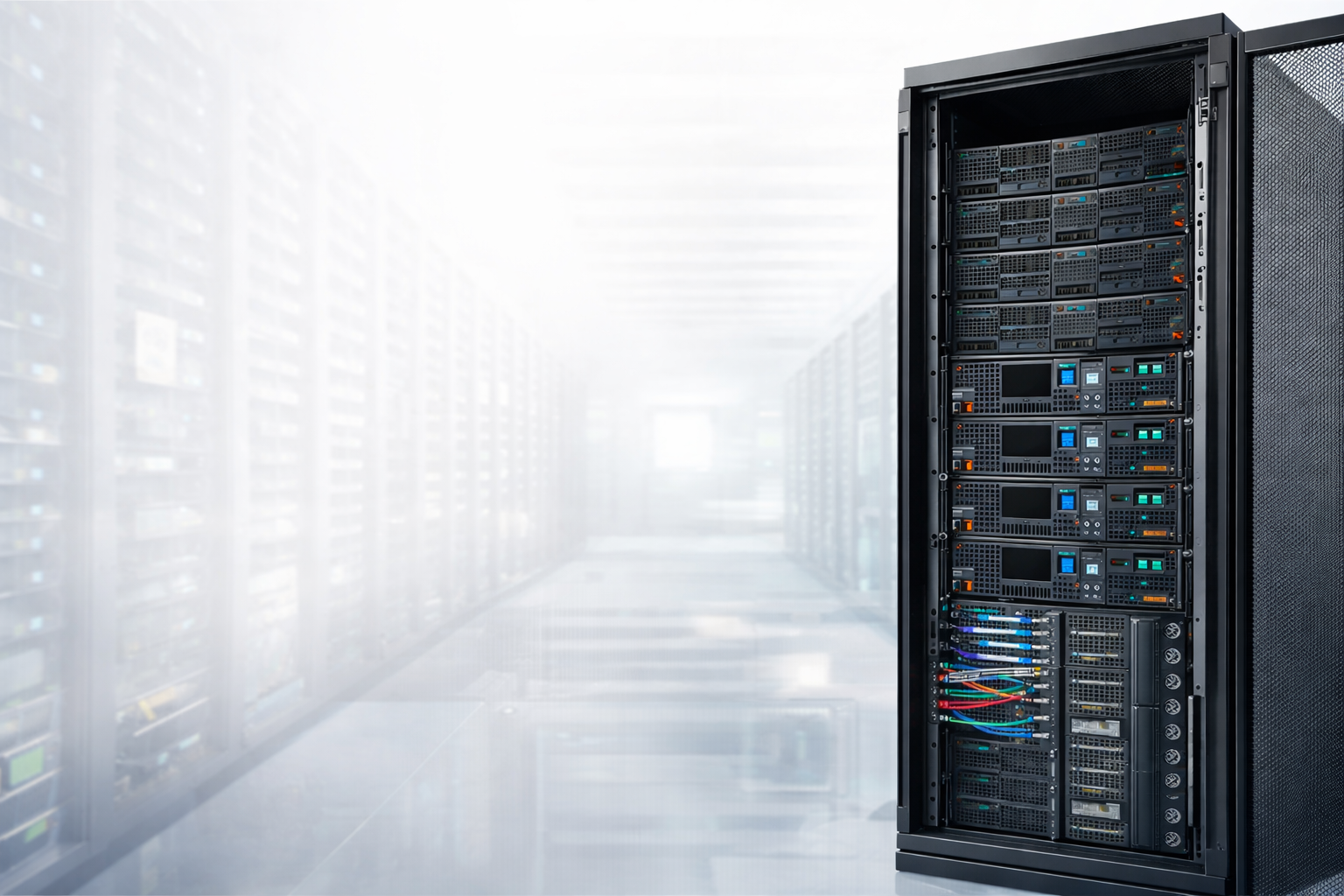
Enclosed Server Rack
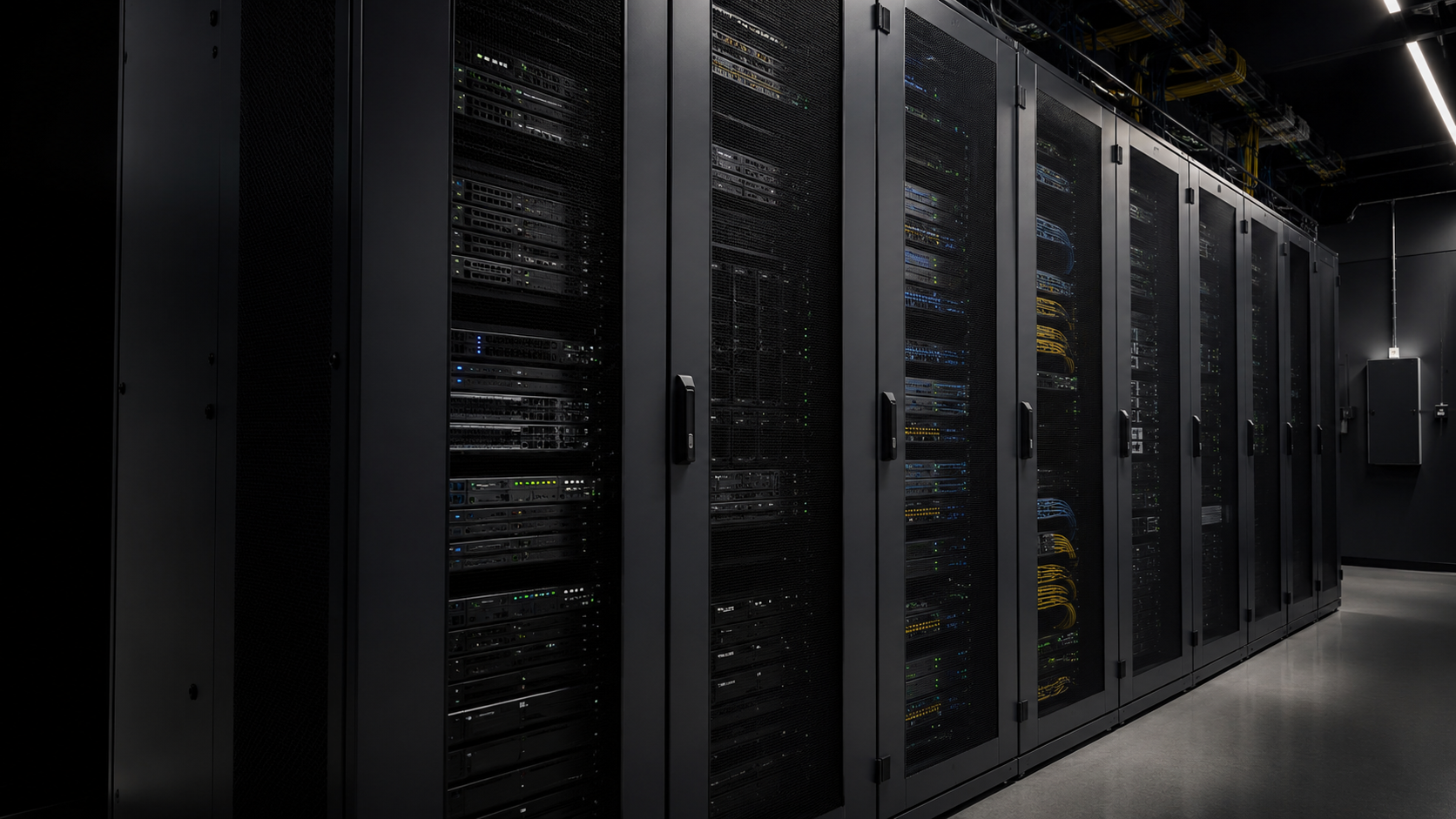
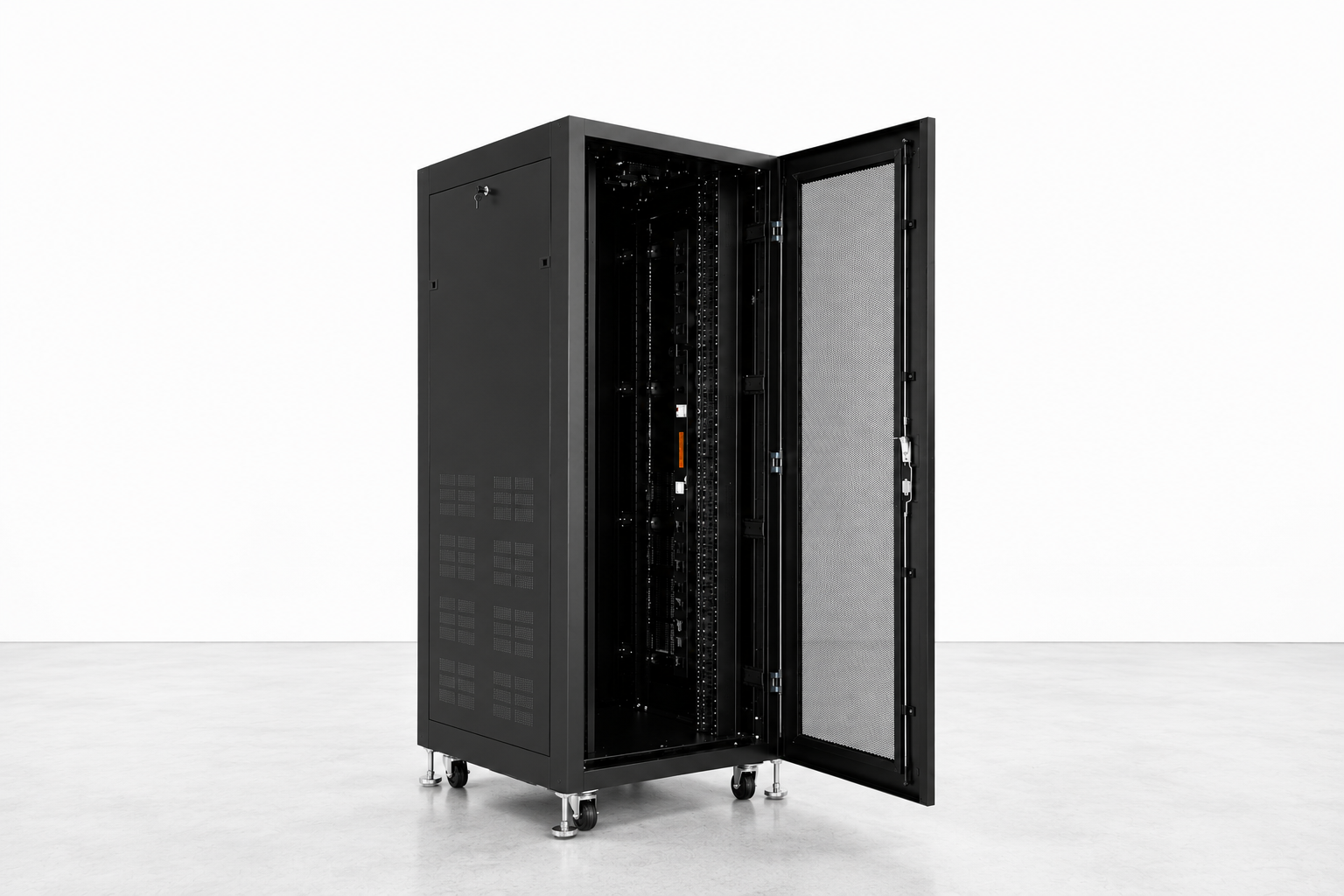
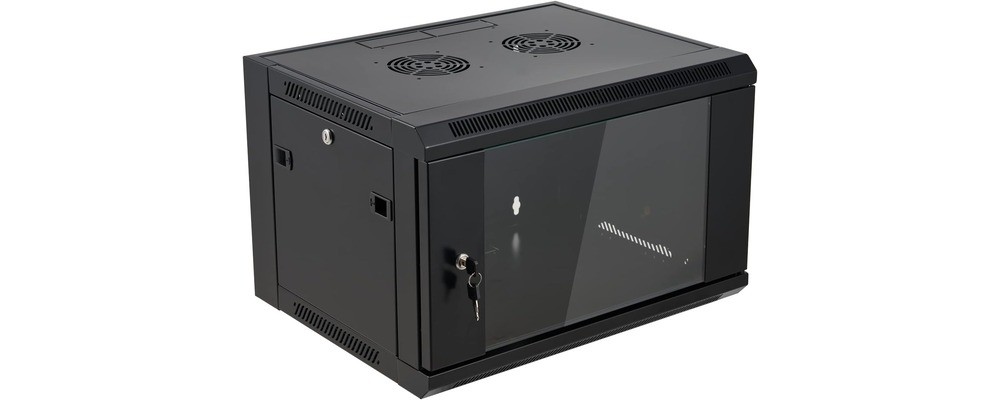
Full steel cabinet with doors, panels, and lock.
Secure Dust Protected Professional
Open frame vs enclosed — what actually separates them
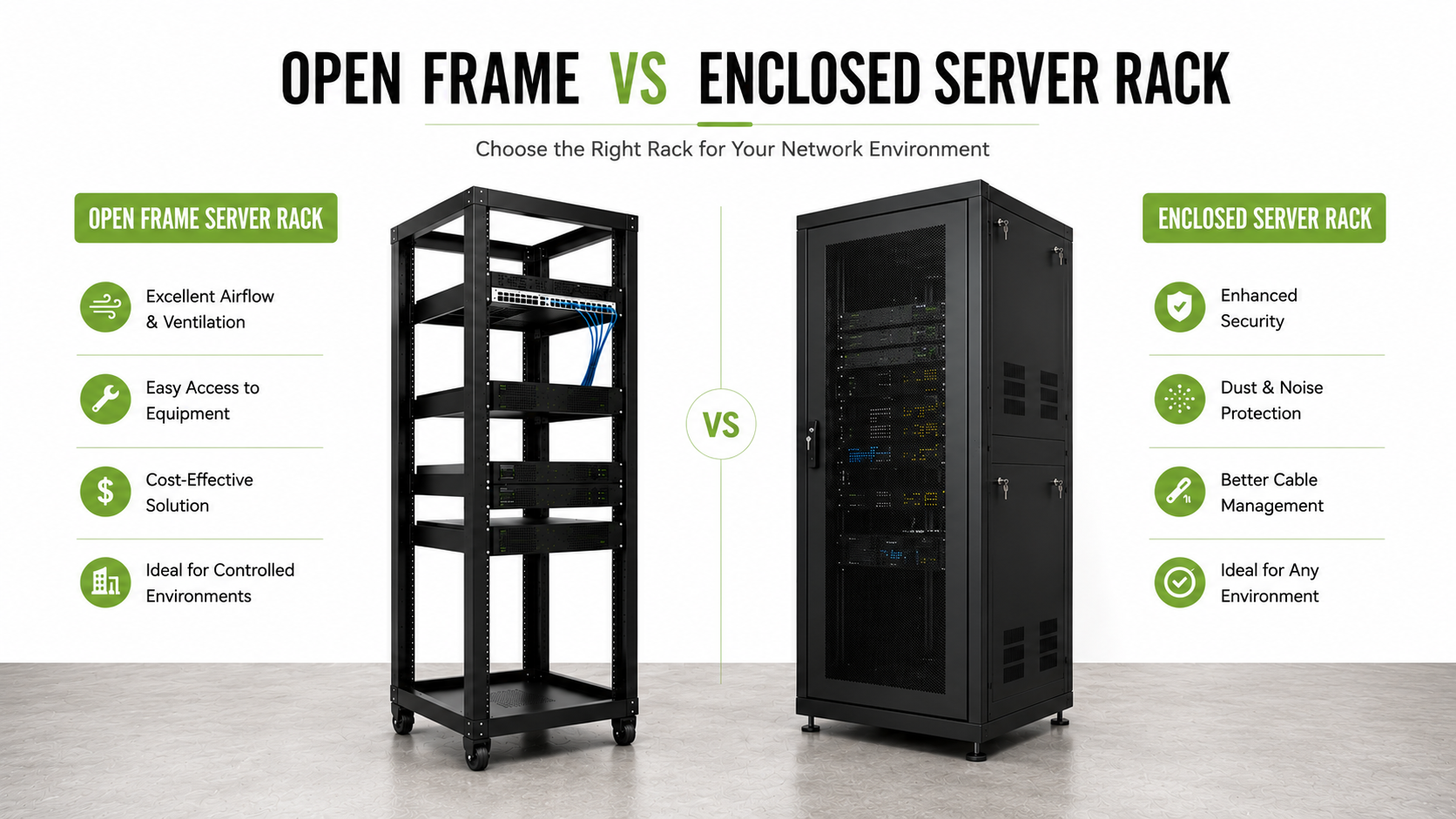
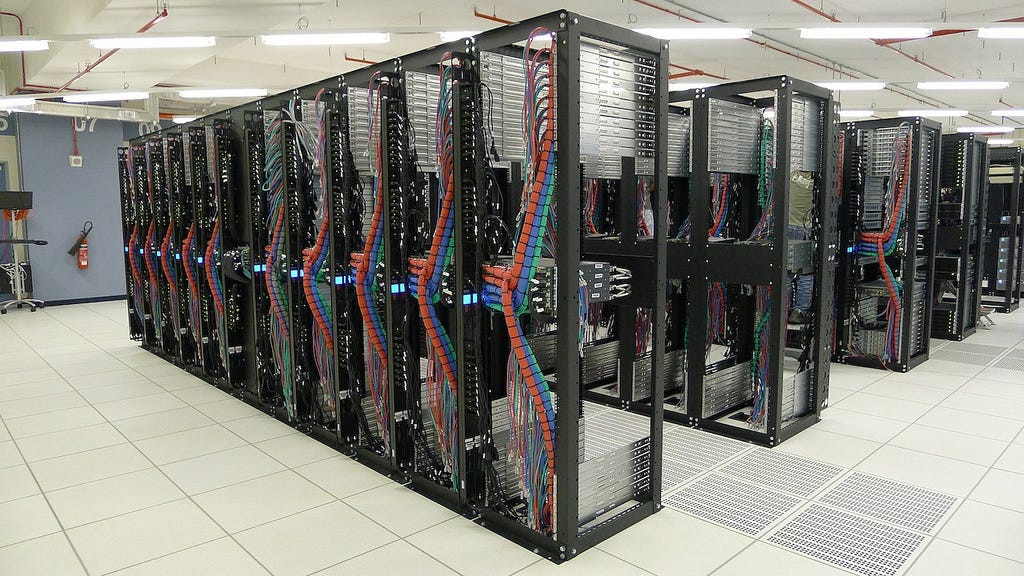
At its core, this is a simple distinction: an open frame rack is a structural frame. An enclosed rack is a protective cabinet. Every other difference — airflow, security, dust protection, cable management, aesthetics — flows from this one fundamental choice.
Open Frame
Structure only
VS
Enclosed Rack
Structure + protection
| Feature | Open Frame Rack | Enclosed Server Rack | Winner for India |
|---|---|---|---|
| Airflow | Unrestricted — air enters from all sides | Controlled front-to-back through perforated doors | Open frame (by volume); Enclosed (by direction) |
| Dust protection | None — equipment fully exposed to ambient | High — filtered front door blocks particulates | Enclosed wins — India has high dust levels |
| Physical security | None — equipment visible and accessible | Full — lockable front and rear doors | Enclosed wins — unless room is fully secured |
| Cable management | Fully visible — all cables accessible from any angle | Managed — internal vertical and horizontal managers | Open frame (for dense structured cabling) |
| Weight | Lighter — no panels or doors (typically 20–40kg) | Heavier — full steel construction (typically 60–120kg) | Open frame (for floor load-sensitive rooms) |
| Aesthetics | Industrial — all equipment and cabling visible | Professional — clean, uniform exterior finish | Enclosed wins — for client-facing or shared spaces |
| Cooling integration | Room-level cooling only (CRAC / split AC) | Rack-level: in-row cooling, blanking panels, hot aisle | Enclosed (for structured thermal management) |
| EMI / noise | No shielding — equipment noise fully exposed | Steel panels provide passive EMI containment | Enclosed wins — for dense compute environments |
| Installation speed | Faster — no doors to remove, full open access | Slower — door removal required for full rear access | Open frame (for frequent equipment changes) |
| Typical deployment | Large data centres, NOCs, telco exchanges | Office server rooms, SMB IT, branch deployments | Enclosed for 85% of Indian IT deployments |
The India context: In mature data centre markets like the US and Europe, open frame racks dominate because deployments happen inside pressurised, filtered, temperature-controlled raised-floor environments. In India, most server rooms are standard office rooms with split ACs, high ambient dust, and mixed-access teams. In this environment, enclosed racks with filtered front doors deliver significantly better long-term outcomes for equipment reliability, security, and maintainability.
When to choose an open frame rack
Open frame racks are the right choice in specific, well-defined scenarios. Outside these scenarios, enclosed racks almost always win in Indian conditions.
Choose open frame when…
Do NOT choose open frame when…
Eterna’s observation: In 8 out of 10 enquiries we receive for open frame racks from Indian IT teams, an enclosed rack is actually the better technical choice once we understand the installation environment. We always ask about the room before recommending a rack type — and we recommend the right product even if it means suggesting a different one.
When to choose an enclosed server rack
Enclosed racks are the right choice for the vast majority of Indian IT deployments. Here is the definitive list of scenarios where enclosed is the only sensible specification.
85%
Of Indian IT server room deployments where enclosed rack is the correct choice
3×
More dust ingress into open frame racks vs enclosed in typical Indian office environments
60–80µm
Eterna powder coat DFT — standard on all enclosed racks, IS 13871 compliant
SMB & mid-market IT rooms
The server room is typically a repurposed office space, store room, or dedicated room with a split AC. Dust levels are significant. Staff access is not strictly controlled. An enclosed rack with a filtered perforated front door, lockable rear door, and brush-strip cable entry is the correct specification. Eterna’s 42U × 600 × 1000mm enclosed rack is the most commonly specified product for this application in India.
Branch office & retail chain IT deployments
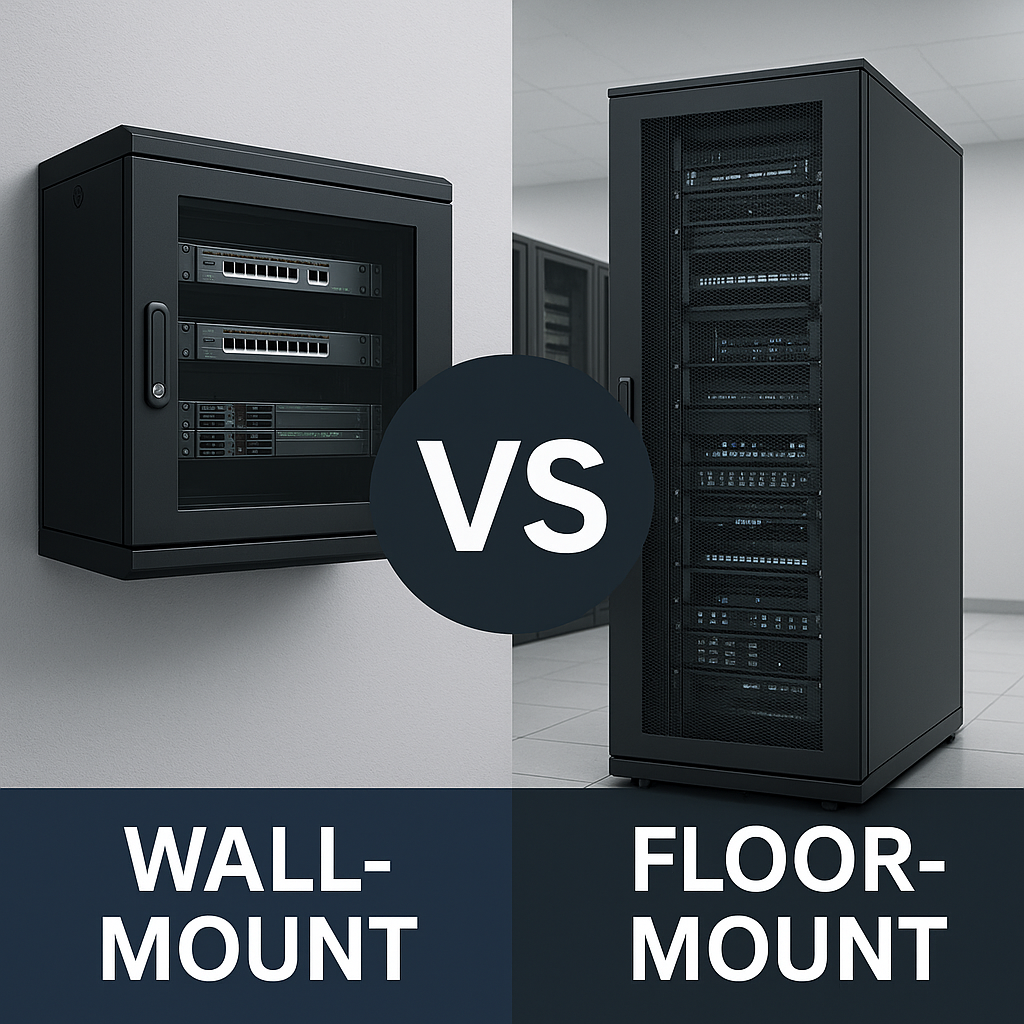
A branch IT closet shares space with cleaning supplies, stationery, and non-IT staff. An enclosed wall-mount rack (9U–18U) with a lockable door is non-negotiable. Eterna supplies 9U, 12U, and 18U wall-mount enclosed racks with glass or perforated steel doors for branch office deployments across banks, retail chains, NBFC branches, and government offices.
Government & PSU data centres
Government data centres and NIC-managed server rooms are subject to physical security audit and compliance requirements. Enclosed racks with lockable front and rear doors, earthing compliance per IS 1732, and documented load ratings are mandatory. Eterna supplies GeM-registered enclosed server racks for government procurement across UP, Delhi, Bihar, Rajasthan, and Maharashtra.
Colocation & managed hosting racks
Co-location facilities in Navi Mumbai (Yotta, NTT, CtrlS, STT) assign individual enclosed racks or cages to tenants. Even in a Tier III/IV data centre environment, the enclosed rack provides per-tenant physical security, limits cross-contamination from adjacent racks, and supports individual power metering and locking. Eterna supplies 42U and 47U–48U high-density enclosed racks for co-location deployments.
Edge deployments & remote sites
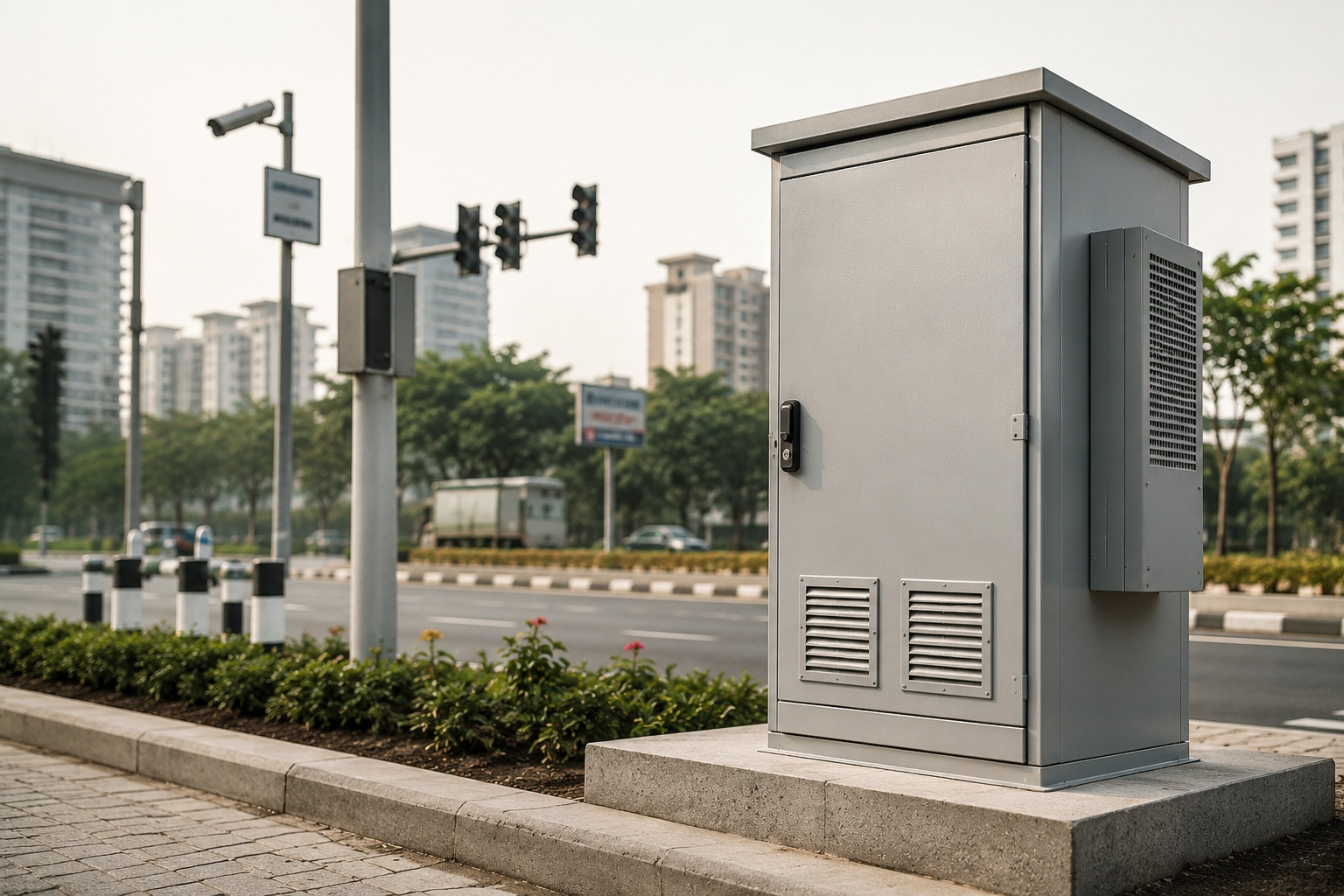
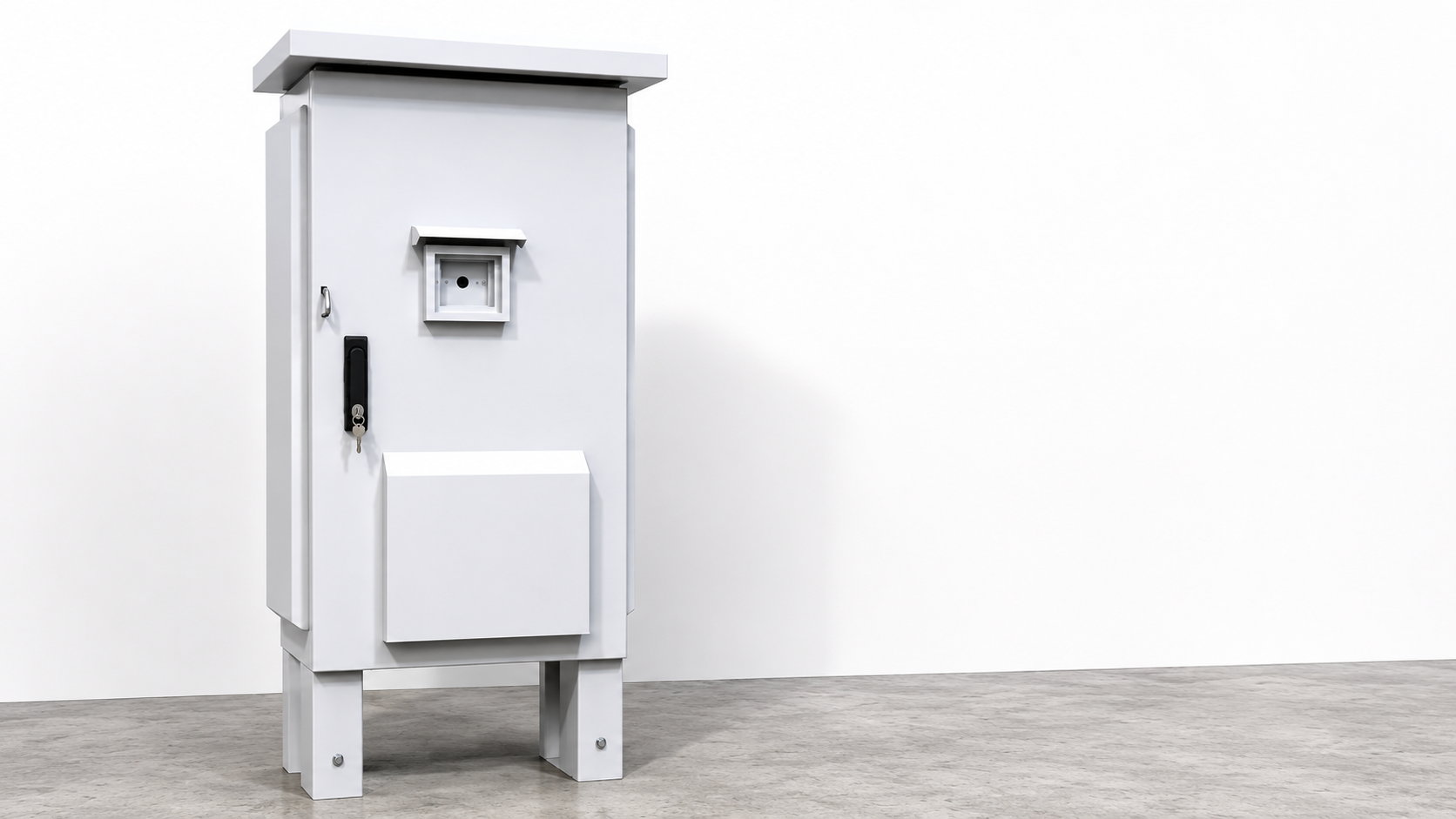
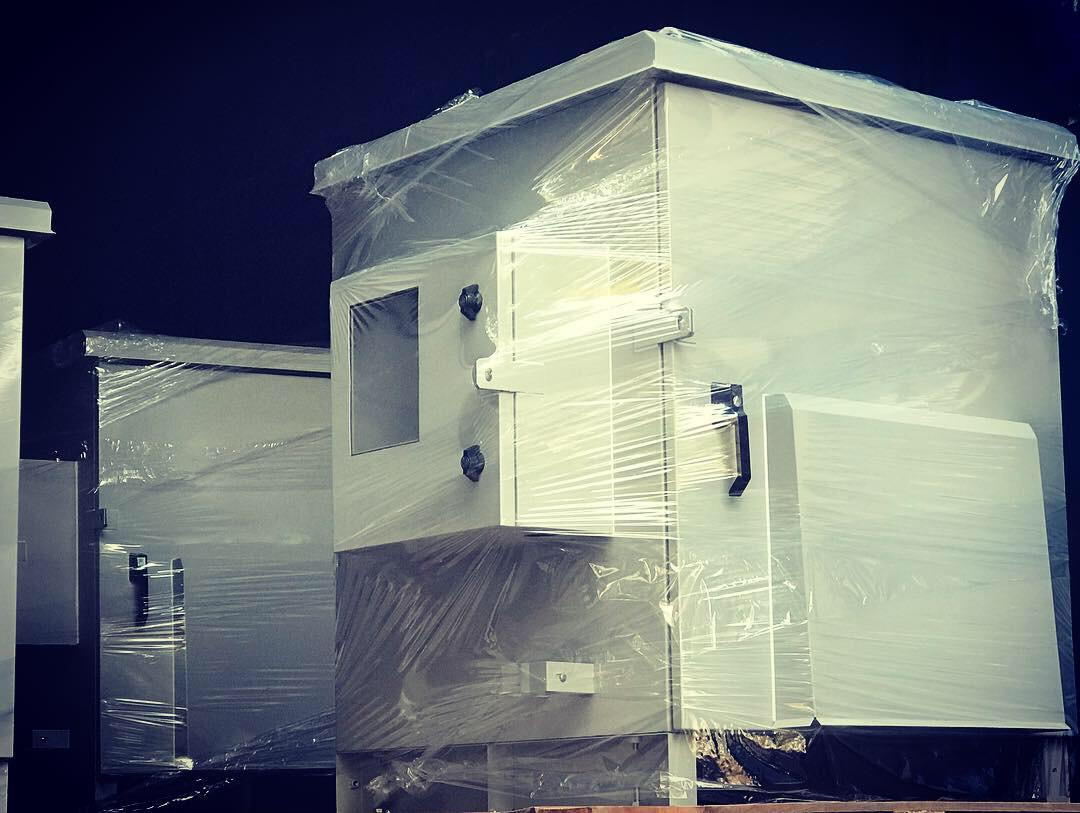
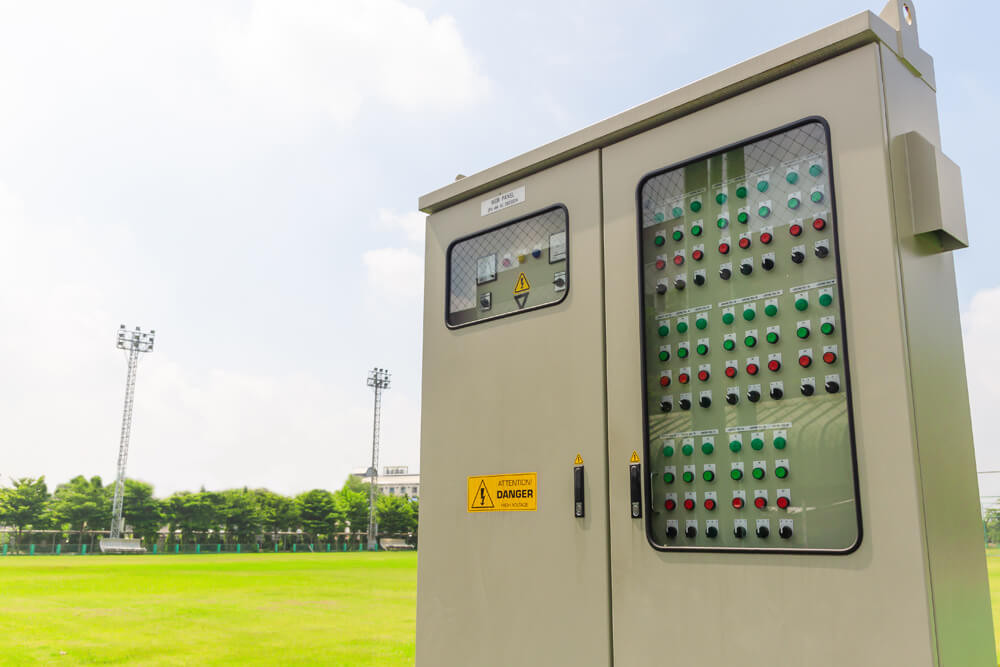
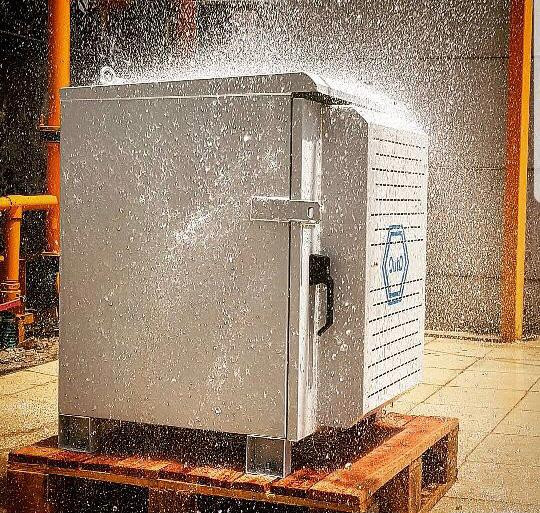
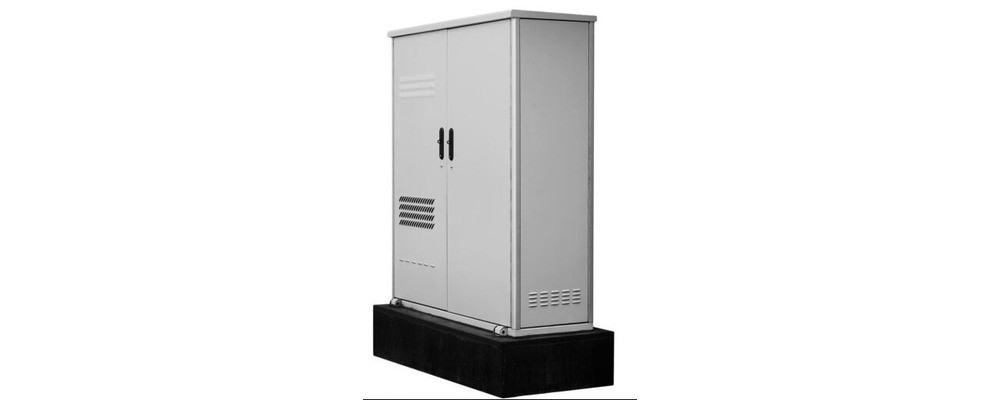
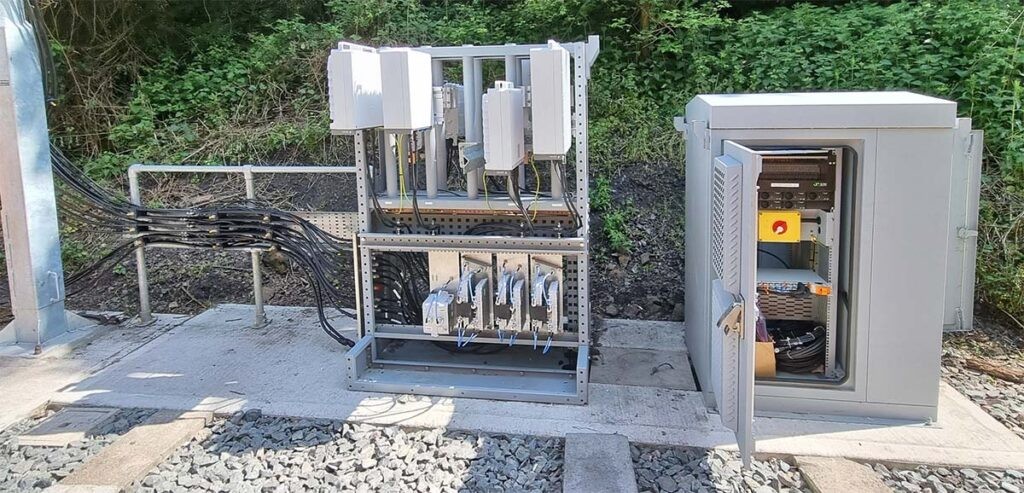
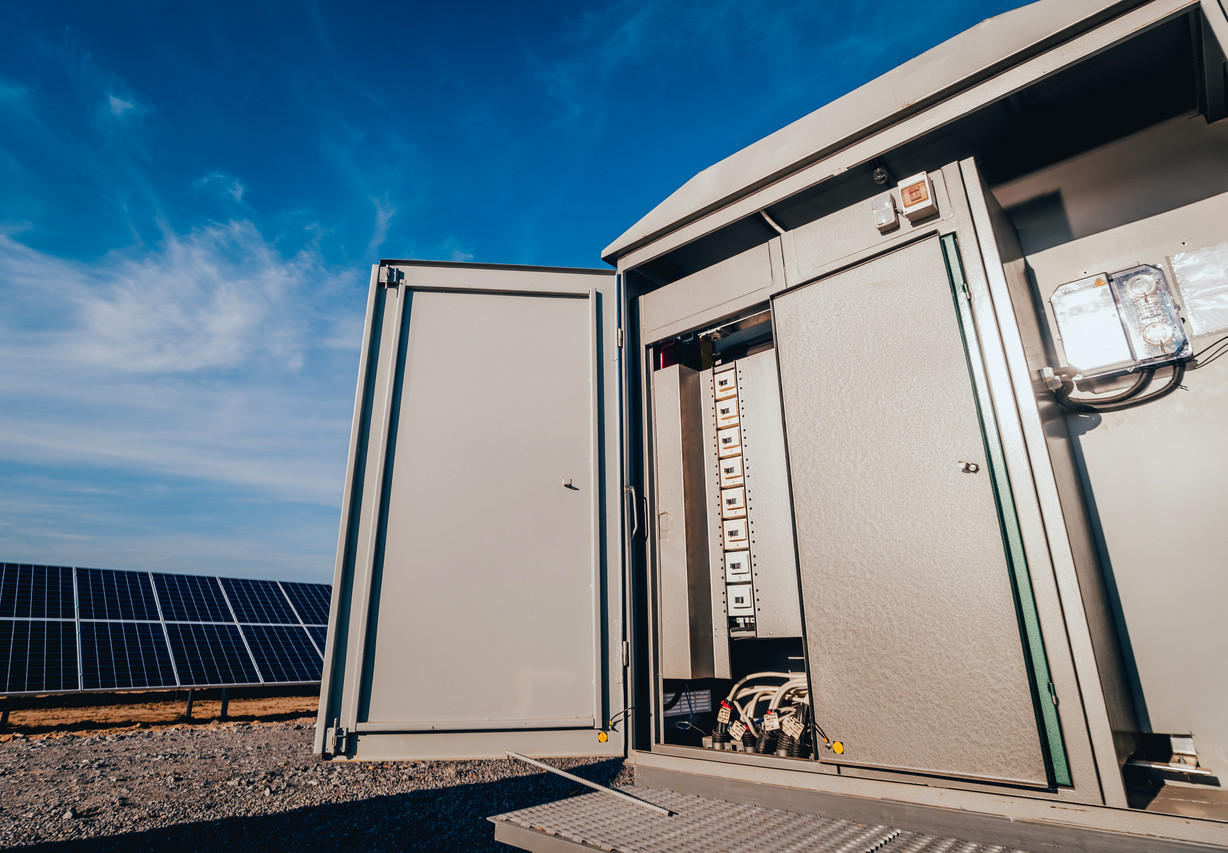
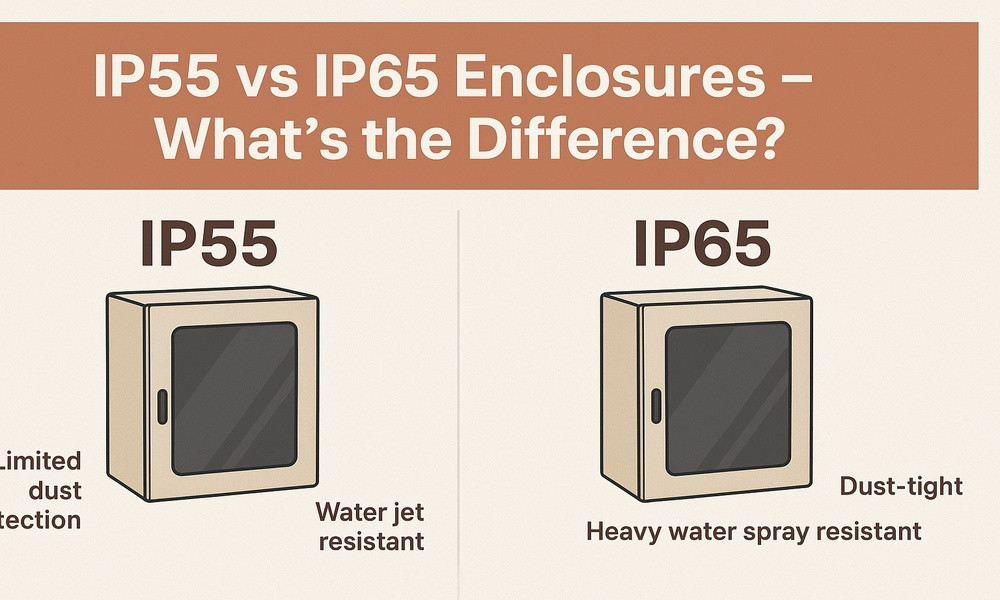
Edge computing nodes at retail outlets, railway stations, highway tolls, and industrial sites are installed in environments with no environmental control whatsoever. An enclosed rack — or an IP-rated outdoor cabinet for uncontrolled environments — is the only option. Eterna manufactures enclosed racks and IP-rated outdoor enclosures for edge and remote site deployments.
The Eterna enclosed rack advantage: Every Eterna enclosed server rack ships with cable management provisions, earthing kit, M6 cage nut set (10U worth), brush-strip cable entry panels, and a blanking panel set. The front door perforation is a minimum 65% open area for airflow compliance. RAL 7035 (light grey) or RAL 9005 (black) as standard — custom RAL from 10+ units.
Getting the size right — depth, width, and U-height
The most common rack procurement mistake in India is not choosing between open frame and enclosed — it is specifying the wrong depth. A rack that is too shallow for your servers is a safety hazard and a wasted investment.
| Equipment Type | Typical Equipment Depth | Add Cable Clearance | Minimum Rack Depth | Recommended Rack Depth |
|---|---|---|---|---|
| Network switches / patch panels | 200–450mm | +150mm rear cable | 600mm | 800mm |
| 1U rackmount servers (Dell R650, HPE DL360) | 620–720mm | +150mm rear cable + CMA | 900mm | 1000mm |
| 2U servers (Dell R750, HPE DL380) | 720–850mm | +150mm rear cable + CMA | 1000mm | 1200mm (high-density) |
| Blade server chassis | 700–900mm | +200mm rear cable | 1000mm | 1200mm |
| Storage arrays (NetApp, Dell EMC) | 800–1000mm | +100mm rear cable | 1000mm | 1200mm |
| KVM / console drawer | 150–250mm | +100mm rear | 600mm | 800mm |
| UPS / PDU | 300–600mm | +100mm | 600mm | 800mm |
Critical warning for Indian buyers: Many low-cost racks available in Nehru Place and online marketplaces are sold as “1000mm depth” but state EXTERNAL dimensions. The internal usable depth after accounting for front and rear door thickness, cable management panels, and vertical manager channels can be 80–120mm less. Always ask for the INTERNAL usable depth, not the external cabinet dimension. Eterna specifies both on every product datasheet.
Standard width guide
All 19-inch EIA-310-D compliant racks have the same internal mounting width (482.6mm). The external cabinet width varies:
600mm external width
Standard for networking, SMB server rooms, telecoms, and most office IT rooms. Internal mounting width remains 19 inches. Side cable channels are narrower. Most common specification in India for 42U and below.
800mm external width
Data centre standard. Wider side channels for vertical cable management. Required for hot-aisle/cold-aisle containment systems. Standard specification for 47U and 48U high-density racks at co-location facilities in Navi Mumbai and Greater Noida.
Eterna Global Solutions — full rack range
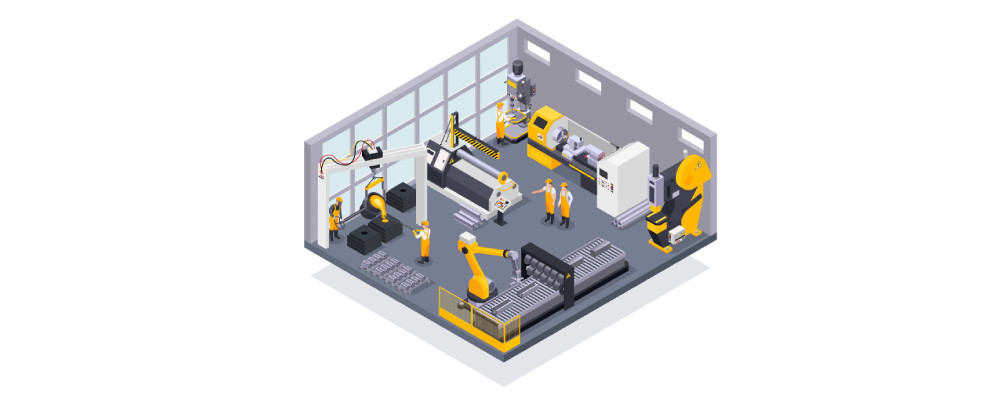
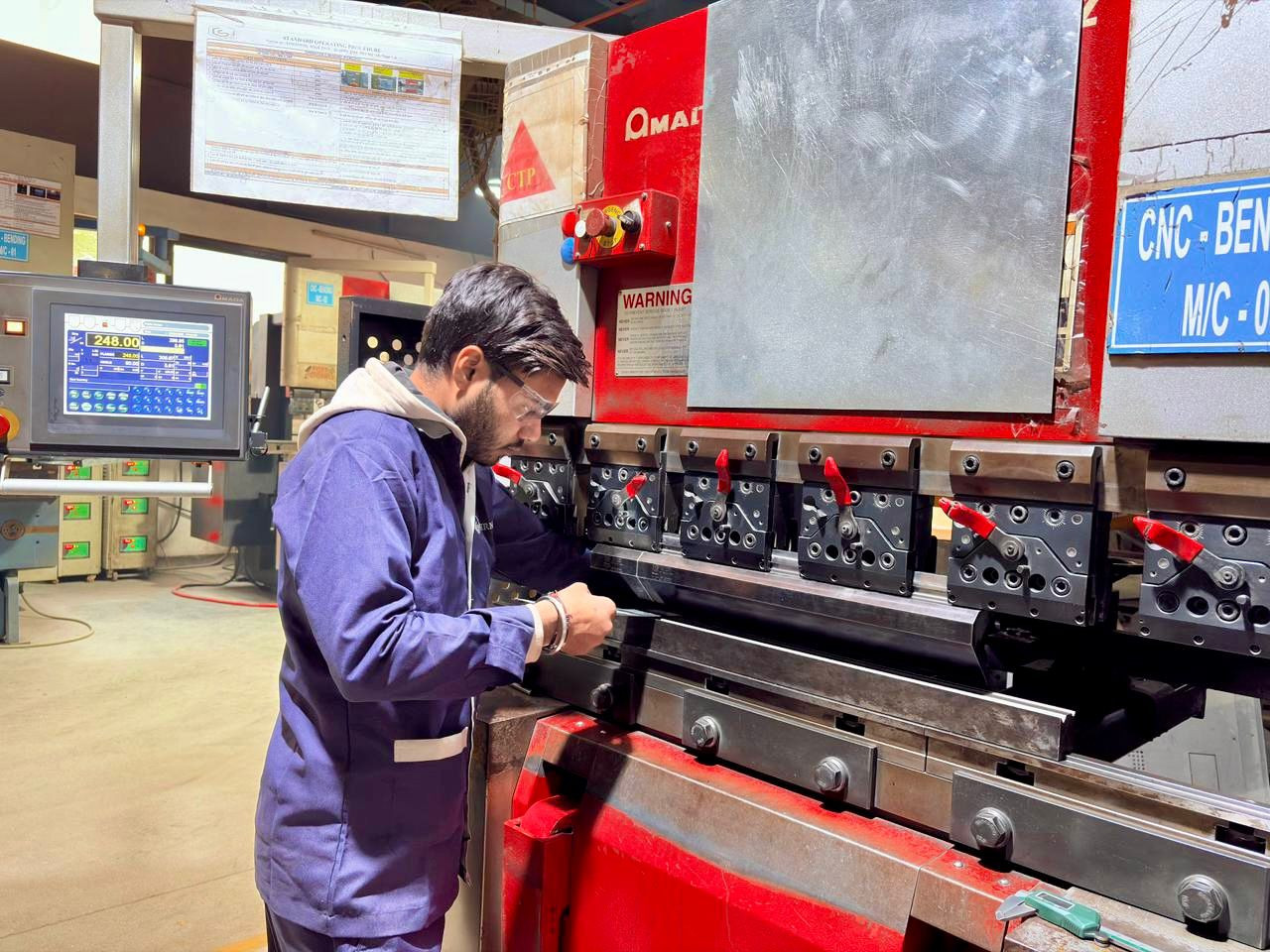
Eterna manufactures both open frame and enclosed server racks at our Sector 80, Noida facility. Every rack is EIA-310-D compliant, built from IS 513 CRCA steel, and powder coated to IS 13871. Same-day dispatch within NCR for stock items, subject to availability.
| Model | Type | External H×W×D (mm) | Steel Gauge | Static Load | Standard Finish |
|---|---|---|---|---|---|
| 6U Wall Mount | Enclosed | 368 × 600 × 450 | 1.2mm CRCA | 60 kg | RAL 9005 |
| 9U Wall Mount | Enclosed | 500 × 600 × 450 | 1.2mm CRCA | 80 kg | RAL 9005 |
| 12U Wall Mount | Enclosed | 632 × 600 × 500 | 1.2mm CRCA | 100 kg | RAL 9005 |
| 18U Wall Mount | Enclosed | 900 × 600 × 500 | 1.5mm CRCA | 120 kg | RAL 9005 |
| 22U Floor Standing | Enclosed | 1100 × 600 × 800 | 1.5mm CRCA | 500 kg | RAL 7035 |
| 27U Floor Standing | Enclosed / Open Frame | 1340 × 600 × 1000 | 1.5mm CRCA | 600 kg | RAL 7035 |
| 37U Floor Standing | Enclosed / Open Frame | 1800 × 600 × 1000 | 1.5mm CRCA | 800 kg | RAL 7035 |
| 42U Floor Standing | Enclosed / Open Frame | 2055 × 600 × 1000 | 1.5mm CRCA | 1000 kg | RAL 7035 |
| 47U Floor Standing | Enclosed / Open Frame | 2275 × 800 × 1200 | 2.0mm CRCA | 1200 kg | RAL 7035 |
| 48U Floor Standing | Enclosed / Open Frame | 2320 × 800 × 1200 | 2.0mm CRCA | 1200 kg | RAL 7035 |
| 52U Special Order | Enclosed | 2497 × 800 × 1200 | 2.0mm CRCA | 1400 kg | RAL 7035 |
| Custom | Any | As specified | 1.2–2.5mm | As designed | Any RAL |
Quick lead times from Sector 80, Noida: Same-day dispatch (NCR, subject to stock) • 1–2 days Delhi / Gurgaon • 5–7 days Mumbai • 3–4 weeks custom production. Call +91-8800499646 to confirm stock before placing a time-sensitive order.
5 mistakes Indian buyers make when choosing a rack type
1. Choosing open frame because it looks more “professional”
Open frame racks are standard in large data centres — but those data centres have pressurised, filtered, temperature-controlled environments. Putting an open frame rack in a standard office server room exposes equipment to dust, variable humidity, and physical access risk. Professional-looking is relative; reliable-performing is what matters.
2. Specifying enclosed and then ordering the wrong depth
The single most common rack error in India. Modern 1U and 2U servers are 700–850mm deep. A 600mm or 800mm deep enclosed rack leaves servers protruding out the rear — a fire hazard, a cable hazard, and a reason the rear door will never close properly. Always specify 1000mm internal depth minimum for server deployments.
3. Buying the cheapest open frame rack for a mixed environment
Open frame racks are lighter and often cheaper. This makes them attractive to cost-conscious procurement teams. But in an environment that is not a purpose-built data centre, the cost of a single drive failure due to dust ingress or an insurance claim due to equipment theft will exceed the cost difference many times over.
4. Ignoring the earthing specification
Both open frame and enclosed racks must have continuous earth bonding from every metal component — rails, doors, side panels — to the main earth bar. Resistance must be <0.1 Ω between any two metal points. This is a safety requirement per IS 1732 and IS/IEC 60364. Cheap racks from unverified suppliers routinely fail this test.
5. Not asking for the steel gauge in writing
A 42U rack quoted significantly below market rate is almost certainly using 0.8mm or 1.0mm CRCA instead of the standard 1.5mm. A 1.5mm CRCA enclosed rack under a 500kg server load is safe and stable. A 0.8mm rack will deform, flex at the rail mounting points, and eventually fail structurally. Ask for the steel gauge and grade in writing before every order. Eterna uses IS 513 CRCA at minimum 1.2mm (wall-mount) and 1.5mm (floor-standing) as standard.
Frequently asked questions
What is the difference between an open frame rack and an enclosed server rack? —
An open frame rack is a two or four-post steel rail frame with no side panels, doors, or top cover. It provides unrestricted airflow and easy front and rear access but offers no dust protection or physical security. An enclosed server rack is a full steel cabinet with front door (perforated, mesh, or glass), rear door, side panels, and top panel. It provides dust protection, physical security via locking doors, structured front-to-back airflow, and a professional finish. For most Indian IT deployments outside purpose-built data centres, an enclosed rack is the better technical choice.
Which rack is better for a server room in India — open frame or enclosed? +
For most Indian server rooms, an enclosed rack is the correct choice. Indian office environments have high ambient dust, variable air quality, and typically lack the pressurised, filtered air supply of a purpose-built data centre. An enclosed rack with a filtered perforated front door prevents dust ingress, provides physical security, and contains airflow more effectively in a standard split-AC-cooled server room. Open frame racks are only appropriate inside Tier II+ data centres with dedicated environmental controls and strict access management.
What depth rack do I need for my servers? +
Modern 1U and 2U servers (Dell PowerEdge, HPE ProLiant, Cisco UCS) are typically 700–850mm deep. Add 100–150mm for rear cable management. This means a minimum 1000mm internal depth rack is required for server deployments. For high-density deployments with cable management arms, specify 1200mm. Networking-only racks (switches and patch panels) can use 600–800mm depth. Always confirm the INTERNAL usable depth, not the external cabinet dimension, as these differ by 80–120mm.
Can I use a wall-mount rack for servers? +
Wall-mount racks (6U–18U) are suitable for small server deployments only — typically 1–3 servers plus networking equipment. The key constraint is depth: most wall-mount racks are 450–600mm deep, which is insufficient for modern full-depth servers. For server deployments, verify the server depth before selecting a wall-mount rack, or use a floor-standing rack from 22U upwards.
What load rating do I need for a 42U server rack? +
For a standard 42U rack with modern 1U and 2U servers, specify a minimum 500kg static load rating. For high-density deployments with blade servers, storage arrays, or dense networking, specify 800–1000kg. Eterna’s standard 42U floor-standing rack carries a 1000kg static load rating. Always verify the rail load rating separately from the total frame rating, as the rails are often the limiting factor in cheaper racks.
Does Eterna manufacture both open frame and enclosed server racks? +
Yes. Eterna Global Solutions (Sector 80, Noida) manufactures both open frame and enclosed server racks in 6U to 48U configurations, with 52U available on special order. Both types are EIA-310-D compliant, built from IS 513 CRCA steel, and powder coated to IS 13871. We supply IT teams, system integrators, and data centre operators across Delhi NCR, UP, Mumbai, and pan-India. Same-day dispatch within NCR for stock items, subject to availability. Custom configurations from 10 units minimum.
Get a Same-Day Quote from Eterna
Tell us your rack type, size, quantity, and delivery location. Eterna Global Solutions — Sector 80, Noida — will send you a detailed quote within the same business day.


-20082508144130.jpg)
-20082508385589.jpg)


-29112509574730.jpg)

-18122502213226.png)